


Showing 921 - 940 of 2859 results
Scientific Computing
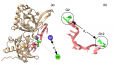
The Scientific Computing team supports researchers by performing numerical simulations that complement experimental research. In particular, we use state-of-the-art software to perform computational quantum mechanical modelling, molecular dynamics simulations, lattice dynamics calculation, data analysis and visualisations.

About us
The Detection & Imaging group builds on ANSTO’s 70-year history of scientific achievements and contributions in meeting the nuclear needs of industry, globally.

Community FAQs
Frequently asked questions about ANSTO for the community.

About the ANSTO Hackathon

Learn from Australia's nuclear experts
With over 70 years of nuclear expertise, ANSTO offers expert education and training programs

Visiting Australia

ANSTO-University of Wollongong Joint Project Seed Funding

Visiting Australia - ANSTO-HZB Neutron Training Course 2024
Fingermark forensics
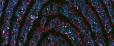
Most fingermark research has largely focussed on the organic material in residues. Consequently, a gap in fundamental knowledge exists when it comes to inorganic components such as metals.
High Performance Macromolecular Crystallography Beamline (MX3)
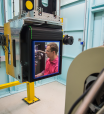
The High Performance Macromolecular Crystallography beamline will enable the study of very small (sub-5 micrometre) or weakly diffracting crystals, providing a state-of-the-art high-throughput facility for researchers. MX3 will be able to study the structures of large proteins and protein complexes for virology, drug design and industrial applications via goniometer mounted crystals, in-tray screening, or via serial crystallography methods.

Nanoprobe beamline (NANO) - under construction
The BRIGHT Nanoprobe beamline provides a unique facility capable of spectroscopic and full-field imaging. NANO will undertake high-resolution elemental mapping and ptychographic coherent diffraction imaging. Elemental mapping and XANES studies (after DCM upgrade) will be possible at sub-100 nm resolution, with structural features able to be studied down to 15 nm using ptychography.

ANSTO User Meeting 2021 - Awards
You are invited to submit to the various awards from ANSTO, User Advisory Committee (UAC) and Australian Neutron Beam User Group (ANBUG).

The Victor Chang Institute School Science Awards
Data Analysis
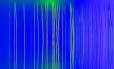
Below lists some useful programs for data reduction, search matching, analysis and structure visualisation of diffraction data.

Powder Diffraction
The Powder Diffraction beamline at the Australian Synchrotron is optimised for carrying out structural investigation under non ambient conditions and as a function of time.

Flexible, printable X-ray detectors
Low-cost X-ray detectors featuring high sensitivity, durability and physical flexibility are required in fields ranging from medical imaging to defence. In this study, a new material for X-ray detection was coupled with inkjet printing to produce a series of prototype X-ray detectors.
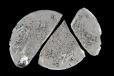
The impact of boron on glass surface properties
Within the bulk structure of such glasses, boron is known to be a key actor, as it exhibits intriguing and composition-dependent changes in coordination state that often drive properties.

Environmental Performance
In accordance with section 516A of the Environment Protection and Biodiversity Conservation Act 1999 (EPBC Act), ANSTO is required to provide an annual report that outlines ANSTO’s environmental performance over the period and how ANSTO accords with the principles of ecologically sustainable development.