

Showing 101 - 120 of 213 results
New research project to understand sediment in Dee Why lagoon

Beamline scientist (MEX)
Role at ANSTO
Two ANSTO scientists made an Officer of the Order of Australia

COVIDSafe Plan Victoria
This COVIDSafe Plan describes the actions that ANSTO will take to keep our staff, contractors and visitors and platform users and collaborators safe and minimise the risk of the spread of COVID-19 infection.
Understanding how ventilation might impact blood flow in ventilated preterm babies
Hudson Institute of Medical Research and Monash University researchers used synchrotron X-rays produce powerful visualisation of video of changes to blood flow to brain during ventilation in large preterm clinical models.

About the ANSTO Hackathon
Dharawal mural and sign unveiled
Dharawal Mural tells an ancient story. Aboriginal and Torres Strait Islander viewers are advised that webpage contains images of people who have died.
Study of polar ice confirms carbon-climate feedback
Investigators have verified and quantified the relationship between the Earth’s land biosphere and changes in temperature and provided evidence that temperature impacts the cycling of carbon between land, ocean and the atmosphere.
A cleaner future for Darwin Harbour

Principal Scientist – X-ray Fluorescence Microscopy
Principal Scientist – X-ray Fluorescence Microscopy

Laboratory Operations Manager, National Deuteration Facility
Role at ANSTO
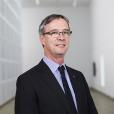
Director Australian Synchrotron
Role at ANSTO
International experts looking at the nuclear power technologies for the future met in Sydney
ANSTO hosted an international meeting of Expert and Policy group members for Generation IV Forum (GIF).

ANSTO-University of Wollongong Joint Project Seed Funding
‘Atomic chicken-wire’ is key to faster DNA sequencing
An unusual and very exciting form of carbon - that can be created by drawing on paper - looks to hold the key to real-time, high throughput DNA sequencing, a technique that would revolutionise medical research and testing.
New species of rare 100-million years old flying reptile found in Australia
An international team of academic researchers led by Curtin University have provided a description of a new species of pterosaur, a flying reptile.
Publications
Publications and resources from the Powder Diffraction beamline.

Instrument Scientist BILBY (SANS)
Role at ANSTO
Imaging and medical
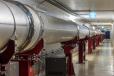
The Imaging and Medical beamline (IMBL) is a flagship beamline of the Australian Synchrotron built with considerable support from the NHMRC. It is one of only a few of its type, and delivers the world’s widest synchrotron x-ray ‘beam’.