

Showing 101 - 120 of 164 results

Principal Scientist - Soft x-ray spectroscopy
Role at ANSTO

Radioactive Waste Management Specialist
Laura Maynard is a Radioactive Waste Management Specialist working in ANSTO’s Nuclear Waste Solutions division.
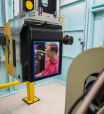
High Performance Macromolecular Crystallography Beamline (MX3)
The High Performance Macromolecular Crystallography beamline will enable the study of very small (sub-5 micrometre) or weakly diffracting crystals, providing a state-of-the-art high-throughput facility for researchers. MX3 will be able to study the structures of large proteins and protein complexes for virology, drug design and industrial applications via goniometer mounted crystals, in-tray screening, or via serial crystallography methods.
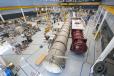
Australian Centre for Neutron Scattering
The Australian Centre for Neutron Scattering (ACNS) is a major research facility for neutron science that comprises a suite of neutron instruments with a range of techniques for scientific investigations in physics, chemistry, materials science, medicine and environmental science among other fields.
From ice cores to cosmic events: plenary speakers announced
Four international authorities will deliver plenary addresses virtually at the 15th International Conference on Accelerator Mass Spectrometry (AMS15) , which will be held online from 15-19 November.

Radiation training terms and conditions
On behalf of ANSTO thank you for your interest in our tours. We hope your visit to ANSTO will be both enjoyable and informative.

Community FAQs
Frequently asked questions about ANSTO for the community.
Unusual state of matter in new material holds promise for transformative quantum technologies
ANSTO has provided supporting experimental evidence of a highly unusual quantum state, a quantum spin liquid (QSL), in a two-dimensional material.
Explaining glaciers of solid methane and nitrogen on Pluto
Research reports for the first time how solid methane and nitrogen expand in response to temperature changes and resolves an historic ambiguity relating to the structure of nitrogen.

Energy use and emissions
Detailed data on ANSTO electricity use and CO2 emissions for FY2024 - FY2025
Fusion energy facility promises clean energy
NSW RFS Hazard Reduction Burn at ANSTO

OPAL 2024 Shutdown
ANSTO's OPAL reactor is one of the world's most advanced and reliable research reactors today. To ensure we can continue operating OPAL safely and reliably and maximise utilisation, ANSTO must regularly carry out maintenance and upgrades.
Nuclear power technology explored
ANSTO shared expertise on next-generation reactors and nuclear power with sustainable energy experts at the Australian Academy of Science symposium in May.
Beamline Proposal & Experiment Guide
Guide to successful proposals and experiments at the Powder Diffraction beamline.
License to produce Lutetium-177 for clinical trials
ANSTO is proud to announce that a license has been issued by the Therapeutic Goods Administration to produce Lutetium-177 (Lu-177) for use in clinical trials.
Fine particle pollution peaks during bushfires
Recent catastrophic Australian bushfires produced extremely high levels of fine particle pollution.
ANSTO technology and expertise heading to Antarctica for atmosphere studies
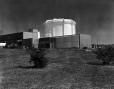
Our History
In April 15, 1953, Australia entered the nuclear science arena, when the Atomic Energy Act came into effect. The Australian Atomic Energy Commission (AAEC) followed and in 1987 the AAEC evolved into the Australian Nuclear Science and Technology Organisation (ANSTO) as it’s known today.