

Showing 101 - 120 of 157 results
Snaphot of molecular mechanism at work in lethal virus
X-ray crystallography at the Australian Synchrotron contributed to major research findings.
Research into cell suicide earns scientist a prestigious award
Dr Angus Cowan has been presented with the Stephen Wilkins Medal, which is awarded annually to a PhD student who completed an outstanding thesis based on work at ANSTO’s Australian Synchrotron.

User access at the National Deuteration Facility
The National Deuteration Facility offers access to deuterated molecules prepared by both in vivo biodeuteration and chemical deuteration techniques.
Aussie scientists to develop $500 million-dollar project in Mexico
Two Australian scientists have been appointed to assist with the development of a $500 million-dollar synchrotron facility in Mexico, the first and largest project of its kind.
Ultra-thin membrane developed for possible use in water filtration
Scientists from Monash, ANSTo and China have developed an ultra-thin membrane that could separate harmful ions from water or capture gases.

Q2XAFS 2023 | Statements
Distinguished lecture: Kimberley rock art
Multi-faceted approach to dating Australian Indigenous rock art from Kimberley region

ANSTO's Australian Synchrotron Program Advisory Committees (PAC)
The Program Advisory Committees review proposals submitted to a particular beamline at the Australian Synchrotron
Peter Lay and Wei Kong Pang recognised by ANSTO for contributions to synchrotron research
Professor Peter Lay from the University of Sydney has been awarded the Australian Synchrotron Lifetime Contribution Award by ANSTO, the Australian Nuclear Science and Technology Organisation.
2019 Shorebirds Competition Summary and Results
From June to August we invited primary schools in Greater Sydney/Illawarra and Melbourne to participate in our 2019 Shorebirds Competition. Students in Years 3 to 6 were asked to create a public awareness poster for a threatened shorebird found in Australia.
First light achieved for new micro-computed tomography beamline under Project BRIGHT
Project Bright, the construction of eight new beamlines at ANSTO’s Australian Synchrotron has reached a milestone by achieving ‘First Light’ for the new micro-computed tomography (MCT) beamline in late NovembeR.

ANSTO User Meeting - Speakers
ANSTO User Meeting 2021 - Speakers
Additional funding for Chronic kidney disease research
ANSTO to receive a new grant to continue to fight chronic kidney disease killer in Sri Lanka.
IAEA and ANSTO partner to support women in nuclear science and technology
This week women in science from 16 countries came together like never before. Inspiring women, young and old, were the first to complete the W4NSEC (Women for Nuclear Science Education and Communication) program that is designed to support women who are wanting to improve their education and communication skills in nuclear science.
What is radiation?
Radiation can be described as energy or particles from a source that travel through space or other mediums. Light, heat, and wireless communications are all forms of radiation.
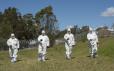
ANSTO in consultation with partners has developed a specialised training course to support first responder agencies in ensuring personnel are effectively prepared for response to radiological and nuclear emergency situations.
Sydney
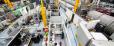
Sydney Access Proposals
View the upcoming proposal deadlines for access to ANSTO’s Research Portal. The User Office provides support for research proposals and enables you to leverage our world-class research infrastructure and facilities.
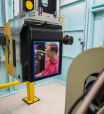
High Performance Macromolecular Crystallography Beamline (MX3)
The High Performance Macromolecular Crystallography beamline will enable the study of very small (sub-5 micrometre) or weakly diffracting crystals, providing a state-of-the-art high-throughput facility for researchers. MX3 will be able to study the structures of large proteins and protein complexes for virology, drug design and industrial applications via goniometer mounted crystals, in-tray screening, or via serial crystallography methods.
Distinguishing black carbon sources
MABI instrument can determine both the concentration and source of black carbon pollution in the atmosphere.