Cosmogenic nuclides help explain stone formation
China’s vertical sandstone pillars studied using nuclear techniques


Showing 1021 - 1040 of 1651 results
China’s vertical sandstone pillars studied using nuclear techniques
Understanding how COVID supresses the immune system may lead to antiviral strategies
Investigators have verified and quantified the relationship between the Earth’s land biosphere and changes in temperature and provided evidence that temperature impacts the cycling of carbon between land, ocean and the atmosphere.
A team of researchers from ANSTO and University of Technology Sydney have set a record by conducting thin film experiments at 1100 degrees C.
Hosts workshop on nuclear forensics for IAEA members.
Development of new techniques makes it possible to date Australian Aboriginal rock art.
ANSTO has hosted an event to launch a new Dharawal language learning resource for primary students at the nandin innovation centre.

ANSTOs capabilities are ideally suited for these investigations relating to quantum technologies.

TSPO is a protein that is associated with crucial cellular functions including the activity of the mitochondria. A mouse model in which the TSPO (18 kDa) is knocked out was developed at ANSTO in collaboration with The University of Sydney.

In this workbook, students will:
- learn about radiocarbon dating and its applications to cultural heritage materials.
- analyse and interpret different texts and videos to better understand Aboriginal and Torres Strait Islander cultures.
- build literacy and numeracy capabilities using cloze passages, writing a glossary, interpreting graphs, answering comprehension questions, and making a timeline and a map to summarise the research stories.
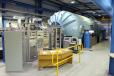
The 10MV tandem accelerator ANTARES is a state-of-the-art facility for ion beam analysis and accelerator mass spectrometry.
ANSTO has produced a comprehensive report for the NSW Department of Planning and Environment that represents a significant scientific investigation of the connections, pathways and processes of water loss from the Thirlmere Lakes system.

In Australia and the Southeast Asia basin, the ANSTO facility offers a wide range of unique nuclear-beam techniques for cultural heritage research.

Research demonstrates the existence of hexagonal planar geometry in a transition metal complex with great potential application across multiple disciplines.
A major study has identified urbanisation and climate change as future threats to drinking water quality.