Vision
ANSTO is one of Australia’s largest public research organisations and is widely recognised as an international player in the field of nuclear science and technology.


Showing 1021 - 1040 of 1740 results
ANSTO is one of Australia’s largest public research organisations and is widely recognised as an international player in the field of nuclear science and technology.
The User Office is the first point of contact for all new and returning facility users accessing ANSTO’s wide range of world-class research infrastructure. These users may be internal ANSTO researchers, external merit researchers, commercial clients, scientific collaborators and partners.

ANSTO is committed to monitoring its environmental performance and providing the community with accurate information about it. We also publish live meteorological data from our 49m Lucas Heights weather tower every 15 minutes.

A selection of research highlights, instrument news and technical developments for scientists.
ANSTO’s radioanalytical facilities are recognised internationally and have extensive experience in the measurement of radioactivity from a wide variety of matrices. Our primary radoianalytical techniques include gamma spectrometry and alpha spectrometry.

Health researchers at ANSTO use world-class nuclear and isotopic techniques to undertake research and development activities to address some of the most challenging health problems.
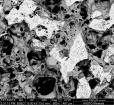
Our dedicated mineralogists provide specialised knowledge on the mineralogy of ores/concentrates and the wide variety of solids and residues typically generated in hydromet processes. We have well-equipped facilities that can handle a diverse range of samples, particularly those containing elevated concentrations of uranium and thorium.

Australia’s Open Pool Australian Lightwater (OPAL) reactor is a state-of-the-art 20 megawatt multi-purpose reactor that uses low enriched uranium (LEU) fuel to achieve a range of activities to benefit human health, enable research to support a more sustainable environment and provide innovative solutions for industry.
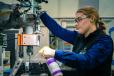
Ready to start a hands-on career? ANSTO’s Apprenticeship Program gives you the chance to earn while you learn, build real trade skills and contribute to work that supports Australia’s leading nuclear science and technology organisation.
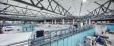
The Australian Synchrotron is a source of powerful X-rays and infrared radiation that can be used for a wide range of scientific and technical purposes. Synchrotron X-rays are millions of times brighter than those produced by conventional X-ray machines in laboratories and hospitals.
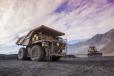
For over 45 years, ANSTO has provided consultancy and process development services to the mining and minerals processing industries in Australia and globally.
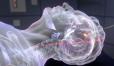
The radiography program focuses on the development of Neutron Capture Enhanced Particle Therapy (NCEPT) from initial preclinical work, to clinical trials and finally commercial translation and licencing.

Unique landmark instrumentation and expertise are a hallmark of ANSTO’s sovereign capability, unavailable anywhere else in Australia. Our ability to identify the source of hazardous particulates in air, the age of water in aquifers and the detailed chemistry of toxic elements in complex soil and biota specimens are just some examples of ANSTO capability.

CORIS360® GNI images gamma-ray and thermal neutron radiation sources, delivering an unprecedented ability to detect, localise, and identify nuclear materials.
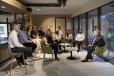
ANSTO's Graduate Program develops the next generation of Australian business and science leaders, by providing the best and brightest postgraduate students with a two-year rotation cycle, tailored to match your talents, goals and interests.
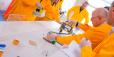
ANSTO has over 35 years' experience in providing radiation safety management with teams offering radiation consultancy, instrument calibration and radiation safety training tailored to our clients' needs.
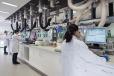
The Australian Critical Minerals Research and Development Hub (the Hub) unites the expertise of top Federal science agencies: ANSTO, Geoscience Australia, and CSIRO with the aim of addressing technical challenges and drive collaborative research across the critical minerals value chain.
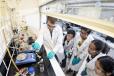
Winners of the Big Ideas Competition 2021

Jack the Super Prawn lives in the Barrier Reef and uses his powers to protect the environment. With JackVac, he cleans up rubbish and impurities in seawater. With JackCopter, he soars high into the air, where you wouldn't normally see a prawn.
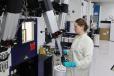
The Biosciences group of researchers at ANSTO supports the development and translation of radiopharmaceuticals to improve human health.