
Project BRIGHT
The BRIGHT Project will expand the beamline infrastructure of the Australian Synchrotron to increase both its capacity and capabilities.


Showing 1041 - 1060 of 1740 results
The BRIGHT Project will expand the beamline infrastructure of the Australian Synchrotron to increase both its capacity and capabilities.
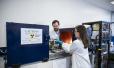
The work of the group comprises Radioactivity Measurement Standards, Radioanalytical chemistry, Environmental Radioactivity Measurement Centre, Nuclear security science and Environmental monitoring.
Deuteration and nuclear techniques can contribute to the science of beauty.
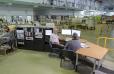
ANSTO plays a leading role in measuring and characterising fine particles from a range of locations around Australia and internationally.

In space, without the protection of the magnetosphere, the type and dose of radiation is considerably different to what is naturally experienced on earth.

The ANSTO Senior Leaders review and agree on issues and actions with organisation-wide significance.

ANSTO Publications Online is a digital repository for publications authored by ANSTO staff and collaborators since 1956.
Research is being undertaken through an Australian Research Council Discovery Project "Reconstructing Australia’s fire history from cave stalagmites", led by Professor Andy Baker at UNSW Sydney and Dr. Pauline Treble at ANSTO. The project aims to calibrate the fire-speleothem relationship and develop coupled fire and climate records for the last millennium in southwest Australia.

ANSTO offers access to a range of scholarships, awards, grants and prizes. Find out what's open for application.
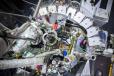
At ACNS we currently have 13 instruments in our user program, which use a variety of scattering techniques to probe materials over a range of length scales.

For more than half a century, ANSTO's specialised services have supported the unique requirements of customers working in health, agriculture, defence, mining, nuclear medicine and more.

ANSTO Synroc technology provides a safe, secure matrix for the immobilisation and final disposal of radioactive waste.

The Centre for Acclerator Science operates accelerators that can be used for space radiation testing.
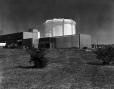
In April 15, 1953, Australia entered the nuclear science arena, when the Atomic Energy Act came into effect. The Australian Atomic Energy Commission (AAEC) followed and in 1987 the AAEC evolved into the Australian Nuclear Science and Technology Organisation (ANSTO) as it’s known today.
A high-level strategy for ANSTO to support environmental sustainability
The role of trace elements as palaeoclimate proxies has been explored in ANSTO-led collaborative environmental research.
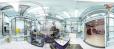
The Powder Diffraction beamline at the Australian Synchrotron is optimised for carrying out structural investigation under non ambient conditions and as a function of time.

The ANSTO Year In Industry Internship Program is for penultimate year students studying towards relevant scientific and/or engineering degrees.

Ultra-flexible electronics has many potential applications within areas such as for example the military, healthcare and energy.