

Showing 121 - 140 of 160 results
Services - Taipan
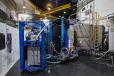
Sample environments, Data analysis, SpICE and SICS
ANSTO nuclear safety specialist and synchrotron scientist among Superstars of STEM
ANSTO’s Dr Joanne Lackenby and Dr Katie Sizeland have been selected 2018 Superstars of STEM as some of Australia’s most inspiring scientists, technologists and educators.

CORIS360® GNI - Gamma Neutron Imager
CORIS360® GNI images gamma-ray and thermal neutron radiation sources, delivering an unprecedented ability to detect, localise, and identify nuclear materials.

About the ANSTO Hackathon
Soft x-ray spectroscopy
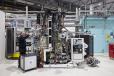
Soft x-rays are generally understood to be x-rays in the energy range 100-3,000 eV. They have insufficient energy to penetrate the beryllium window of a hard x-ray beamline but have energies higher than that of extreme ultraviolet light.
A step closer to understanding superconductivity with large international collaboration
ANSTO recognises scientific achievement, leadership, external collaboration and outreach at Awards event
ANSTO recognised the contribution of individuals and teams to nuclear science and technology at the 2023 ANSTO Awards Ceremony held on 25 July.
Successful Repatriation of Australia's Radioactive Waste
The Australian Government’s nuclear agency, ANSTO, together with NSW Police and multiple state and federal authorities, has completed an operation to repatriate radioactive waste from the UK.

Stable Isotope Analyst
Role at ANSTO
Tackling international public health issue
ANSTO facilitating coordinated effort to find the nexus that leads to chronic kidney disease of unknown origin

Mitigation and Optimisation of Radiation Responses
This program explores the mechanism and outcome of the interaction of radiation on biological systems in order to improve our understanding of the impact of radiation on the brain, optimise radiotherapy and develop mitigation strategies for space travellers.

After your experiment
Following your experiment at the Australian Synchrotron there are certain tasks that users can complete including a user feedback survey and claiming reimbursement for travel expenses.
Winners of ANSTO's Neutron and Deuteration Impact Awards show benefit to Australian research priorities
The Australian Centre for Neutron Scattering and National Deuteration Facility have announced the first recipients of the Neutron and Deuteration Impact Awards.
Beamline Proposal & Experiment Guide
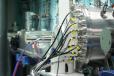
Guide to successful proposals and experiments at the Powder Diffraction beamline.
Mapping the groundwater resources of Mozambique

Science Research Leader and Environmental Scientist
Role at ANSTO
Research investigates low activation and low cost superconducting material for magnetic coils in next generation fusion reactors
Chronic kidney disease of unknown origin
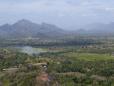
In 2017, ANSTO's CEO signed a Memorandum of Understanding with Sri Lanka to work together to investigate the epidemiology of Chronic Kidney Disease of unknown origin (CKDu).
Synchrotron techniques reveal amount of carbon captured in microscopic seams of deep-sea limestone
A collaboration of Australian scientists has used ANSTO’s Australian Synchrotron to measure the amount of carbon that is captured in microscopic seams of deep-sea limestone, which acts as a carbon sink.