


Showing 121 - 140 of 175 results
Statement of Expectations
On the 10th of October 2025, the Minister for Industry, Science and Technology provided his Statement of Expectations to ANSTO.
Bringing radiochemistry to life
Reducing, reusing and recycling mining waste
Two approaches use existing low cost and low energy technologies to reuse stockpiled waste from mining operations - capturing carbon dioxide in the form of valuable carbonate minerals.
Ancient foods provide clues to past rainfall
Research has helped build a record of rainfall during the late Pleistocene and Holocene, and shed light on the strategies of Indigenous Australians to cope with a changing landscape.
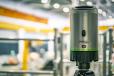
CORIS360® GNI - Gamma Neutron Imager
CORIS360® GNI images gamma-ray and thermal neutron radiation sources, delivering an unprecedented ability to detect, localise, and identify nuclear materials.
Federal grants for ANSTO expertise and infrastructure will benefit manufacturing and nuclear technologies
Three new federal grants were announced to support manufacturing and nuclear technologies.

Post Doctoral Fellow - In Vivo Biologist
Role at ANSTO
Using nuclear techniques to track micronutrients applied to wheat crops
Researchers from Murdoch University and associated collaborators are using ANSTO’s unique nuclear capabilities to gain detailed information about how wheat crops take in administered micronutrients to maximise their efficient use.
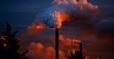
Highlights - Aerosol Sampling
ANSTO has been tracking and publishing data on fine particle pollution from key sites around Australia, and internationally, for more than 20 years.
Meeting attracts large group of users
Combined users meeting highlights how ANSTO expertise and infrastructure can assist research community.
Stable Isotope Analyst
Role at ANSTO
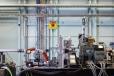
Sample Guide - XFM beamlime
Samples on the X-ray fluorescence microscopy beamline at the Australian Synchrotron.
ANSTO-University of Wollongong Joint Project Seed Funding
Feathery moa’s fossilised footprints, ancient age revealed
ANSTO scientist, Dr Klaus Wilcken of the Centre for Accelerator Science, used cosmogenic nuclide dating to determine the ages of layered sand and gravel samples, in which seven footprints of the flightless bird, the moa, were found on the South Island in New Zealand in 2019.
Australian Synchrotron Data Access & Retention Guide
New grant introduces state-of-the-art capability in stress engineering for Australian industry
New facility will greatly enhance Australia’s capability in stress engineering for industry
Enhancing the science of rivets earns researcher early career award
Dr Rezwanul Haque, now a senior lecturer at the University of the Sunshine Coast, received a national Young Scientist Award for his earlier research using nuclear techniques at ANSTO’s Australian Centre for Neutron Scattering to find cracks and signs of stress in riveted joints in sheet metal in car bodies.
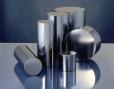
Silicon irradiation
ANSTO is one of the world's leading providers of irradiation services for silicon ingots, which are used by the multimillion dollar electronics industry across Europe and Asia. Each year, ANSTO irradiates more than 50 tonnes of silicon.
ANSTO contributes to funded ARC Discovery and Linkage projects
Enhancing safety of trailer trucks among research projects