Rock art dating
Development of new techniques makes it possible to date Australian Aboriginal rock art.


Showing 121 - 140 of 168 results
Development of new techniques makes it possible to date Australian Aboriginal rock art.

ANSTO has been tracking and publishing data on fine particle pollution from key sites around Australia, and internationally, for more than 20 years.
In early February, ANSTO was honoured to host the International Atomic Energy Agency (IAEA) National Liaison Officers Meeting and Sub Regional Approach to the Pacific Islands (SAPI) Programme, which focused on the development and delivery of the IAEA Technical Cooperation Programme in the Pacific.
ANSTO renewed its Memorandum of Understanding (MOU) with the Japan Proton Accelerator Research Complex (J-PARC) operated by the High Energy Accelerator Research Organisation (KEK) and Japan Atomic Energy Agency (JAEA). Now broadened to include their partner Comprehensive Research Organization for Science and Society (CROSS), the signing took place early in the year and a celebratory workshop was held late July.
Principal Research Scientist Andrew Smith is travelling to the Taylor Glacier in Antarctica with American collaborators on a 3-year National Science Foundation project now in its final year that involves mining tonnes of ice for palaeoclimate research.
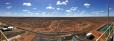
The Minerals consultancy group at ANSTO has expertise in chemical engineering, metallurgy, mineralogy, chemistry, geology, and radiation safety. We can support our client's project by providing process development services, technical review, and research.
Highlighting the contribution of four inspirational ANSTO leaders on International Women's Day.
Study helps make carbon dating a more accurate chronological tool.
In a paper published yesterday, Traditional Owners and researchers report on the oldest securely dated pottery discovered in Australia, located at Jiigurru (Lizard Island Group) on the Great Barrier Reef.
Evidence of the earliest occupation of the coasts of Australia from Barrow Island, Northwest Australia.

ANSTOs capabilities are ideally suited for these investigations relating to quantum technologies.
Commitment to undertake health research.
ANSTO scientist, Dr Klaus Wilcken of the Centre for Accelerator Science, used cosmogenic nuclide dating to determine the ages of layered sand and gravel samples, in which seven footprints of the flightless bird, the moa, were found on the South Island in New Zealand in 2019.
The unique magnetic properties and nontrivial quantum effects were observed and measured in an advanced material with potential application for quantum computing.
The cost of building radiation-hardness testing into the design and qualification of electronics is typically well under one per cent of a major project’s budget.