Science and Engineering Challenge
Over 250 students took part in ANSTO's annual Science and Engineering Challenge with an all-girl school taking top honours.


Showing 121 - 140 of 250 results
Over 250 students took part in ANSTO's annual Science and Engineering Challenge with an all-girl school taking top honours.



You are invited to submit to the various awards from ANSTO and the User Meeting 2026 organising committee.
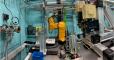
With enhanced submicron spatial resolution, speed and contrast, the Micro-Computed Tomography beamline opens a window on the micron-scale 3D structure of a wide range of samples relevant to many areas of science including life sciences, materials engineering, anthropology, palaeontology and geology. MCT will be able to undertake high-speed and high-throughput studies, as well as provide a range of phase-contrast imaging modalities.
An international collaboration led by The University of Sydney and supported by ANSTO has developed an advanced, innovative artificial intelligence application that could be used to help examine tissue samples and identify signs of disease/
ANSTO hosted an international meeting of Expert and Policy group members for Generation IV Forum (GIF).
A new nuclear medicine waste processing facility that showcases ANSTO Synroc technology is under construction.
The Australian led regional cancer care project in medical physics held its first regional training course in Malaysia to progress Rays of Hope.

Below lists some useful programs for data reduction, search matching, analysis and structure visualisation of diffraction data.
IAEA Regional Training Course on coastal environments held at ANSTO for representatives from Asian Pacific.

Information about ANSTO’s COVID-19 Rapid Antigen Test Program

ANSTO’s user office in Melbourne offers access to the Australian Synchrotron, a world-class research facility with over 4,000 user visits per year. ANSTO seeks collaboration and partnerships with research organisations, scientific users and commercial users.
The newly built Medicines Manufacturing Innovation Centre (MMIC), co-located at the Australian Synchrotron at Clayton, was officially opened on Wednesday by the Victorian Deputy Premier and Minister for Medical Research the Hon Ben Carroll.
ANSTO scientists were members of an inter-disciplinary team led by the University of Sydney, who examined six 19th century West African swords, using a non-invasive multi-methodological approach to reveal the composition and manufacturing history of the iron implements.