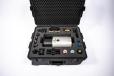
CORIS360® case studies
View these case studies for a more detailed look at industry challenges and how the CORIS360® radiation imaging technology is improving operational decision making and keeping workers safe.


Showing 141 - 160 of 445 results
View these case studies for a more detailed look at industry challenges and how the CORIS360® radiation imaging technology is improving operational decision making and keeping workers safe.
X-ray crystallography at the Australian Synchrotron contributed to major research findings.
An international collaboration led by The University of Sydney and supported by ANSTO has developed an advanced, innovative artificial intelligence application that could be used to help examine tissue samples and identify signs of disease/

Research to detect and measure air pollution, the composition the atmosphere and mixing in the atmosphere.
Emu instrument Scientist Gail Iles has left the Australian Centre for Neutron Scattering for RMIT.


Think Science! 2025 Summary and results

ANSTO’s user office in Melbourne offers access to the Australian Synchrotron, a world-class research facility with over 4,000 user visits per year. ANSTO seeks collaboration and partnerships with research organisations, scientific users and commercial users.
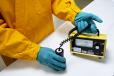
ANSTO: Australia’s knowledge centre for nuclear science and engineering.
ANSTO Head of Research Dr Suzanne Hollins has been appointed to chair IAEA group on nuclear applications.
Innovative software tool developed at ANSTO used at power stations to help maintain plant components and improve the efficiency of operations.

ANSTO is working with BAE Systems Maritime Australia, and the University of Wollongong under the auspices of the DMTC Ltd. on the development of multiphysics numerical simulations capable of capturing thermo-physical, thermo-metallurgical and thermo-mechanical processes taking place during welding.
Recent research led by a team from Flinders University has developed an approach based on a molecular cage to trap dangerous PFAS chemicals.

ANSTO works in partnerships and collaborative ventures with national and international organisations. Partner with ANSTO.
In a new study published in Nature Communications, researchers from UNSW have demonstrated a more sustainable alternative: an electrochemical pathway that couples carbon dioxide and nitrogen-containing species to produce urea under mild conditions.