

Showing 141 - 159 of 159 results

OPAL multi-purpose reactor
Australia’s Open Pool Australian Lightwater (OPAL) reactor is a state-of-the-art 20 megawatt multi-purpose reactor that uses low enriched uranium (LEU) fuel to achieve a range of activities to benefit human health, enable research to support a more sustainable environment and provide innovative solutions for industry.

Senior Nuclear Analyst
Role at ANSTO

Board Member
Professor Helen Garnett is a senior science leader and experienced company director, with a distinguished record spanning national science infrastructure, research and university leadership.

Principal Research Scientist, Project Leader
Role at ANSTO

Imaging Neurophysiologist
Role at ANSTO
2020 Shorebirds Competition Summary and Results
Primary students across Australia were invited to create a public awareness poster for a threatened shorebird found in Australia for our 2020 Shorebirds Competition. In response to COVID-19, and the changes to children’s learning environments, we opened the competition early and also included categories for individual children to enter, as well as school children.
A closer look at the science of detecting flu

Director of the new Environment Research and Technology Group
Role at ANSTO
Dr Karina Meredith was appointed Director of the new Research and Technology Group for Environment effective 15 January 2024.

Data sets
Your students can analyse real research data from ANSTO scientists.
Beamtime guide - Imaging and Medical
Information has been provided to assist with the preparation of experiment proposals and beamtime.

Highlights - Magnetism
Highlights of the Magnetism Project.
Publications
Publications and resources from the Powder Diffraction beamline.
Designed for Radiation Safety Officers working in industrial settings responsible for radioactive substances and/or radiation apparatus. ANSTO is a recognised leader in radiation safety training, delivering industry and regulator-approved courses for licences including IA7, IA8, IA10, IA12, IA19 & IA41.
Sydney

Archive
Archive of ANSTO research publications, seminars and short talks.

Food processing and development
Research can improve both food processing and food product development.

Highlights - Energy Materials
Highlights of the Energy Materials Project.
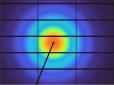
Biological small angle X-ray scattering beamline (BioSAXS)
The Biological Small Angle X-ray Scattering beamline will be optimised for measuring small angle scattering of surfactants, nanoparticles, polymers, lipids, proteins and other biological macromolecules in solution. BioSAXS combines combine a state-of-the-art high-flux small angle scattering beamline with specialised in-line protein purification and preparation techniques for high-throughput protein analysis.
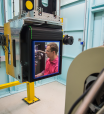
High Performance Macromolecular Crystallography Beamline (MX3)
The High Performance Macromolecular Crystallography beamline will enable the study of very small (sub-5 micrometre) or weakly diffracting crystals, providing a state-of-the-art high-throughput facility for researchers. MX3 will be able to study the structures of large proteins and protein complexes for virology, drug design and industrial applications via goniometer mounted crystals, in-tray screening, or via serial crystallography methods.