ANSTO’s virtual and augmented reality experience
An opportunity to take an unforgettable journey and explore ANSTO science virtually at the atomic scale for National #scienceweek


Showing 141 - 160 of 236 results
An opportunity to take an unforgettable journey and explore ANSTO science virtually at the atomic scale for National #scienceweek
Modifications to promising novel non-fullerene small molecule acceptor in organic thin film for solar cells demonstrates improved power conversion efficiency.
Monash University, University of Queensland and Australian National University researchers have used ANSTO’s Australian Synchrotron in their study of meteorites found on Earth that could be used in future to find evidence of life on the planet Mars.
After careful selection, three Australian science teachers are set to fly to Geneva today after winning positions on the International High School Teacher Programme at CERN.
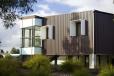
The Australian Synchrotron has an on-site Guesthouse for users and AS guests.

The Program Advisory Committees review proposals submitted to a particular beamline at the Australian Synchrotron
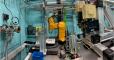
With enhanced submicron spatial resolution, speed and contrast, the Micro-Computed Tomography beamline opens a window on the micron-scale 3D structure of a wide range of samples relevant to many areas of science including life sciences, materials engineering, anthropology, palaeontology and geology. MCT will be able to undertake high-speed and high-throughput studies, as well as provide a range of phase-contrast imaging modalities.
A new study has shown that, rather than being discarded, plastics can be transformed into valuable carbon nanomaterials that help solve both energy and environmental challenges.
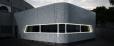
The Advanced Diffraction and Scattering beamlines (ADS-1 and ADS-2) are two independently operating, experimentally flexible beamlines that will use high-energy X-ray diffraction and imaging to characterise the structures of new materials and minerals.
University of Melbourne researchers have investigated a method to produce magnetic nanoparticles in Australia for use in COVID-19 PCR tests.
Dr Katie Sizeland, a Postdoctoral Fellow on the Small Angle X-ray Scattering beamline at the Australian Synchrotron, has been chosen for the Homeward Bound STEMM leadership program

ANSTO has a variety of games and apps to educate students on how radiation works, nuclear medicine, the periodic table, and atom building.
Analysing the microstructure of paracetamol using synchrotron infrared optical technique provides insights.
Pioneering work on materials for energy production, such as lithium ion batteries, has made ANSTO a centre of specialist capabilities and expertise.

A large international research team led by Academia Sinica in Taiwan investigated how heat is transferred in an advanced thermoelectric material made with germanium (Ge) and tellurium (Te) and doped with antimony (Sb). These devices are used to power space probes such as the Mars Curiosity Rover.
Scientists at ANSTO characterise structures with atomic detail using probes such as x-rays, electrons, neutrons and ions.
Researchers have discovered a 380-million-year-old heart – the oldest ever found – alongside a separate fossilised stomach, intestine and liver in an ancient jawed fish, shedding new light on the evolution of our own bodies.