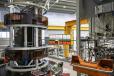
Helium 3 Polariser
This state-of-the-art metastable-exchange optical-pumping helium-3 polarising system enables polarisation-analysis experiments on five of our existing instruments.


Showing 161 - 180 of 261 results
This state-of-the-art metastable-exchange optical-pumping helium-3 polarising system enables polarisation-analysis experiments on five of our existing instruments.

In partnership with the Australian Museum as part of National Science Week explore the 2020 hackathon theme of Deep Blue: Innovation for the future of our oceans

Role at ANSTO

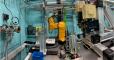
With enhanced submicron spatial resolution, speed and contrast, the Micro-Computed Tomography beamline opens a window on the micron-scale 3D structure of a wide range of samples relevant to many areas of science including life sciences, materials engineering, anthropology, palaeontology and geology. MCT will be able to undertake high-speed and high-throughput studies, as well as provide a range of phase-contrast imaging modalities.
Improving aquaculture for food production in Papua New Guinea
The most important data from NASA’s first crewed Artemis mission may not be its photographs, but the radiation measurements that will shape how humans work and survive beyond travel farther from Earth’s magnetic shelter safely.
Principal Technical Consultant Michael Druce shares some personal insights on the design and construction of ANSTO's nuclear medicine facility.

Eliza is currently taking part in the ANSTO graduate program, in which she will complete her four six-month rotations in different research areas. Eliza has worked in Radiopharmaceutical Development, Minerals, and Environment so far.
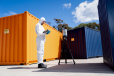
It is critical across many industries to identify and locate sources of radiation accurately and quickly. By accurately imaging radiation across the full energy range, CORIS360™ improves operational decision making across many industry settings.

ANSTO offers capabilities and expertise for the radiation testing and accreditation of space-based systems.
Study revealed that the chemical forms of sulfur change when land is converted from undisturbed soils to cropping soils and forms of sulfur which bind strongly to the soil mineral particles remains far more stable.
The Australian Government’s nuclear agency, ANSTO, together with NSW Police and multiple state and federal authorities, has completed an operation to repatriate radioactive waste from the UK.

ANSTO researchers are investigating nuclear propulsion systems for applications on the sea and in space.

The BRIGHT Project will expand the beamline infrastructure of the Australian Synchrotron to increase both its capacity and capabilities.


You are invited to submit to the various awards from ANSTO, User Advisory Committee (UAC) and Australian Neutron Beam User Group (ANBUG).
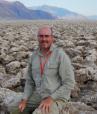
ANSTO scientist Dr Paul Callaghan helped develop new OECD guidance for studying how nanoparticles are absorbed, distributed and cleared by the body.
ANSTO recognised the contribution of individuals and teams to nuclear science and technology at the 2023 ANSTO Awards Ceremony held on 25 July.