Call for Proposals
Proposals at the Australian Centre for Neutron Scattering and National Deuteration Facility.


Showing 161 - 180 of 302 results
Proposals at the Australian Centre for Neutron Scattering and National Deuteration Facility.
The NSW Government will invest $12.5 million to support the expansion of the Innovation Precinct at the Lucas Heights campus of the Australian Nuclear Science and Technology Organisation (ANSTO).
Spatz neutron reflectometer becomes 15th neutron scattering instrument that is used for studies of biological materials and other soft matter.
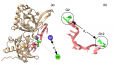
The Scientific Computing team supports researchers by performing numerical simulations that complement experimental research. In particular, we use state-of-the-art software to perform computational quantum mechanical modelling, molecular dynamics simulations, lattice dynamics calculation, data analysis and visualisations.

From June to August we invited primary schools in Greater Sydney/Illawarra and Melbourne to participate in our 2019 Shorebirds Competition. Students in Years 3 to 6 were asked to create a public awareness poster for a threatened shorebird found in Australia.

ANSTO has been tracking and publishing data on fine particle pollution from key sites around Australia, and internationally, for more than 20 years.

Read about an ANSTO scientist and their work to prepare for a school project or interview.
The Australian Synchrotron has an on-site Guesthouse for users and AS guests.
ANSTO scientist, Dr Klaus Wilcken of the Centre for Accelerator Science, used cosmogenic nuclide dating to determine the ages of layered sand and gravel samples, in which seven footprints of the flightless bird, the moa, were found on the South Island in New Zealand in 2019.
MABI instrument can determine both the concentration and source of black carbon pollution in the atmosphere.
The High Performance Macromolecular Crystallography beamline will enable the study of very small (sub-5 micrometre) or weakly diffracting crystals, providing a state-of-the-art high-throughput facility for researchers. MX3 will be able to study the structures of large proteins and protein complexes for virology, drug design and industrial applications via goniometer mounted crystals, in-tray screening, or via serial crystallography methods.
Blake Orr from ARPANSA review the Netflix series Radioactive Emergency.