
Send us feedback
ANSTO welcomes your feedback. Give feedback to any part of ANSTO.


Showing 1721 - 1740 of 2555 results
ANSTO welcomes your feedback. Give feedback to any part of ANSTO.
ANSTO has installed a radon detector for Curtin University in Burrup WA as part of the Murujuga Rock Art Monitoring Program
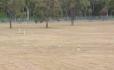
ANSTO is responsible for the Little Forest Legacy Site (LFLS) located within the ANSTO Buffer Zone boundary. This site, formerly known as the Little Forest Burial Ground (LFBG), was used by the Australian Atomic Energy Commission (AAEC) during the 1960’s to dispose of waste containing low levels of radioactivity and beryllium oxide (non-radioactive) in a series of shallow trenches. There has been regular monitoring of the site since 1966 and the results have been reported in ANSTO’s environmental monitoring reports.
ANSTO is a unique national science organisation that began operating under its predecessor The Australian Atomic Energy Commission (AAEC) 70 years ago.
The mechanical, electrical, chemical, optical and thermal properties of glass, as determined by its chemical composition and atomic structure, make it a highly useful material with a myriad of applications.
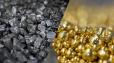
Bring the periodic table to life in this interactive videoconference lesson.
Students see real samples of common elements, learn about their history, properties and uses, and find out how the periodic table was developed during the 19th century.
Students review atomic structure, elements and the organisation of today's periodic table, before applying their knowledge and skills in a fun periodic table game.
Cost: $90 per class.

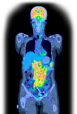
Students explore the medical applications of radioisotopes using an online, scenario-based learning experience.
Students will:
A student workbook to accompany this module is available. Answers available upon request via education@ansto.gov.au

Australia’s Open Pool Australian Lightwater (OPAL) reactor is a state-of-the-art 20 megawatt multi-purpose reactor that uses low enriched uranium (LEU) fuel to achieve a range of activities to benefit human health, enable research to support a more sustainable environment and provide innovative solutions for industry.
ANSTO’s Innovation Precinct has been highlighted in the Greater Sydney Commission’s South District Plan.
International researchers have used nuclear techniques at ANSTO - a centre for food materials science - to develop a methodology that could assist in the design of oleogel systems for food applications.
Principal Research Scientist Andrew Smith is travelling to the Taylor Glacier in Antarctica with American collaborators on a 3-year National Science Foundation project now in its final year that involves mining tonnes of ice for palaeoclimate research.
ANSTO’s Innovation Precinct has been identified as an “emerging precinct” in the Federal Government’s Statement of Principles for Australian Innovation Precincts.