What one moon flyby can and cannot do, and what comes next (Part 2)
Dr Mitra Safavi Naeini continues her commentary of the radiation studies being undertaken in the Artemis II mission.


Showing 181 - 200 of 804 results
Dr Mitra Safavi Naeini continues her commentary of the radiation studies being undertaken in the Artemis II mission.
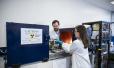
The work of the group comprises Radioactivity Measurement Standards, Radioanalytical chemistry, Environmental Radioactivity Measurement Centre, Nuclear security science and Environmental monitoring.
The installation of a cold neutron source (CNS), a component that reduces the energy and speed of the neutrons from a research reactor for use in scientific instruments, was successfully completed in September 2024.
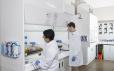
ANSTO’s Radioanalytical Chemistry (RAC) facility combines techniques in radiochemistry and radiological measurement by alpha spectrometry, gamma-ray spectrometry, and liquid scintillation analysis to deliver radiological assessments.


Read about an ANSTO scientist and their work to prepare for a school project or interview.
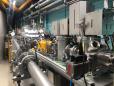
The Medium Energy- X-ray Absorption Spectroscopy beamlines provides access to XANES and EXAFS data from a bending magnet source, optimised for cutting-edge applications in biological, agricultural and environmental science in an energy range that is not currently available at the Australia Synchrotron.
Radiocarbon dating at ANSTO has supported new archaeological research conducted by Flinders University and the University of Queensland that describes significant earth mound features used for cooking that were created by Aboriginal people in the Riverland region of South Australia.
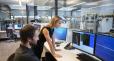
The Centre for Accelerator Science provides complementary capabilities to Synchrotron-based and the neutron-based research with the operation of four accelerators, associated beamlines, clean laboratories and in-house expertise in ion beam analysis (IBA) and accelerator mass spectrometry (AMS).
PhD candidate Vienna Wong is using her FutureNow Scholarship to research ultra-high temperature ceramics, which are emerging materials for extreme environments.

The panel will investigate a wide range of potential effects spanning radiological, environmental, climatic, agricultural, public health, and socio-economic impacts, through a scientifically rigorous and independent lens.

ANSTO is an experienced provider of Teacher Professional Development for Australian and International teachers and our courses cover a wide range of topics. Hear from expert speakers, receive new education resources, and develop lessons for your own class.
Australia’s nuclear agency ANSTO is continuing to lead planning efforts to repatriate what is called a TN-81 cask of intermediate-level radioactive from the United Kingdom in 2022.
Stable isotopes are high useful in investigations of environmental samples.
This month, ANSTO hosted a delegation from the International Partnership for Nuclear Disarmament Verification (IPNDV) as part of the IPNDV’s Plenary meeting in Sydney. The meeting marked the first time Australia has hosted the IPNDV.
Stage 1 of the Stawell Underground Physics Laboratory was officially opened today. It will be home to multi-disciplinary scientists from five research partners who help us understand dark matter.
ANSTO has made two public submissions to parliamentary inquiries with another to be submitted in February 2020 on matters relating to nuclear technologies, their peaceful applications, and the nuclear fuel cycle.