


Showing 1 - 20 of 72 results

Accessing ANSTO’s Service Portal
ANSTO offers a broad range of programs and services to various industries and customers. Many of these services, including the Australian Nuclear Medicine Traceability program, are supported by online customer portals.

Nanoprobe beamline (NANO) - under construction
The BRIGHT Nanoprobe beamline provides a unique facility capable of spectroscopic and full-field imaging. NANO will undertake high-resolution elemental mapping and ptychographic coherent diffraction imaging. Elemental mapping and XANES studies (after DCM upgrade) will be possible at sub-100 nm resolution, with structural features able to be studied down to 15 nm using ptychography.

Archive
See details of previously published customer updates from our Health products team.

How to make a complaint about ANSTO

Highlights - Aerosol Sampling
ANSTO has been tracking and publishing data on fine particle pollution from key sites around Australia, and internationally, for more than 20 years.
ANSTO radon detector redefines the cleanest air on the planet
Advances in radon measurement technology by ANSTO researchers over the past decade have enabled the improved characterisation of the composition of pristine air masses that reach Antarctica.

Aerosol Sampling Program
ANSTO plays a leading role in measuring and characterising fine particles from a range of locations around Australia and internationally.

Archive
Archive of ANSTO research publications, seminars and short talks.

Advanced Diffraction & Scattering Beamlines (ADS-1 and ADS-2) UNDER CONSTRUCTION
The Advanced Diffraction and Scattering beamlines (ADS-1 and ADS-2) are two independently operating, experimentally flexible beamlines that will use high-energy X-ray diffraction and imaging to characterise the structures of new materials and minerals.
Big Ideas
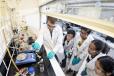
ANSTO Big Ideas encourages students to creatively communicate the work of an Australian scientist, and explain how their work has inspired them to come up with a Big Idea to make our world a better place. This competition is intended to engage and support Australian students in years 7-10 in Science and encourage them to pursue studies and careers in STEM.

Privacy Policy
Australian Nuclear Science and Technology Organisation (ANSTO) is committed to protecting your personal information in accordance with the Privacy Act 1988 (Cth) (Privacy Act) and the Australian Privacy Principles.
Micro-Computed Tomography beamline (MCT)
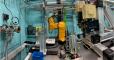
With enhanced submicron spatial resolution, speed and contrast, the Micro-Computed Tomography beamline opens a window on the micron-scale 3D structure of a wide range of samples relevant to many areas of science including life sciences, materials engineering, anthropology, palaeontology and geology. MCT will be able to undertake high-speed and high-throughput studies, as well as provide a range of phase-contrast imaging modalities.

Community FAQs
Frequently asked questions about ANSTO for the community.
Pass the salt: can sodium power the 21st century
Atomic structure of new cathode material for sodium ion batteries helps explain long life

Senior Applied Research Chemist
Role at ANSTO

Beamtime Guide, Technical Info and Updates - MX1 & MX2
The Macromolecular Crystallography beamlines at the Australian Synchrotron (MX1 and MX2) are general purpose crystallography instruments for determining chemical and biological structures.

Shorebirds 2024: Flight for Survival
An initiative for National Science Week 2024 the Shorebirds Competition addresses the 2024 theme for National Science Week, ‘Species Survival’ and provides unique cross-curricula learning for Australian primary students in Years 3 to 6.
Medium Energy X-ray Absorption Spectroscopy Beamline (MEX-1 and MEX-2)
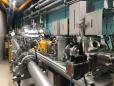
The Medium Energy- X-ray Absorption Spectroscopy beamlines provides access to XANES and EXAFS data from a bending magnet source, optimised for cutting-edge applications in biological, agricultural and environmental science in an energy range that is not currently available at the Australia Synchrotron.

What are radioisotopes?
Radioisotopes are widely used in medicine, industry, and scientific research. New applications for radioisotopes are constantly being developed.