Collecting ice cores for research
Dr Andrew Smith has just finished collecting ice cores and snow samples on the summit of Law Dome in Antarctica,


Showing 21 - 40 of 50 results
Dr Andrew Smith has just finished collecting ice cores and snow samples on the summit of Law Dome in Antarctica,


Read about an ANSTO scientist and their work to prepare for a school project or interview.
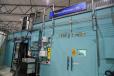
Publications and resources from the Powder Diffraction beamline.
Consultant appointed to consider a variety of financial, manufacture and import options.
Principal Technical Consultant Michael Druce shares some personal insights on the design and construction of ANSTO's nuclear medicine facility.

Ultra-flexible electronics has many potential applications within areas such as for example the military, healthcare and energy.
Study helps make carbon dating a more accurate chronological tool.
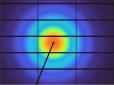
The Biological Small Angle X-ray Scattering beamline will be optimised for measuring small angle scattering of surfactants, nanoparticles, polymers, lipids, proteins and other biological macromolecules in solution. BioSAXS combines combine a state-of-the-art high-flux small angle scattering beamline with specialised in-line protein purification and preparation techniques for high-throughput protein analysis.

The Advanced Diffraction and Scattering beamlines (ADS-1 and ADS-2) are two independently operating, experimentally flexible beamlines that will use high-energy X-ray diffraction and imaging to characterise the structures of new materials and minerals.

ANSTO's Melbourne location is home to the ANSTO-owned and operated Australian Synchrotron. The Synchrotron is one of the Australia's most significant pieces of scientific infrastructure.

The BRIGHT Nanoprobe beamline provides a unique facility capable of spectroscopic and full-field imaging. NANO will undertake high-resolution elemental mapping and ptychographic coherent diffraction imaging. Elemental mapping and XANES studies (after DCM upgrade) will be possible at sub-100 nm resolution, with structural features able to be studied down to 15 nm using ptychography.
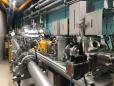
The Medium Energy- X-ray Absorption Spectroscopy beamlines provides access to XANES and EXAFS data from a bending magnet source, optimised for cutting-edge applications in biological, agricultural and environmental science in an energy range that is not currently available at the Australia Synchrotron.
Insights into the formation of deep river canyons mountain ranges in intra-tectonic plate areas by SAAFE Scholarship recipient and collaborators.
The final report on the safety of Building 23 by the independent expert review team has been completed.