

Showing 21 - 40 of 125 results
ARPANSA Direction
ANSTO trade apprentices move in-house
ANSTO Celebrates its Incredible Women in Science
ANSTO is privileged to be home to an incredible array of outstanding women in science. On the International Day of Women and Girls in Science we wanted to thank each one. Thank you!
Australian–New Zealand scientific partnership
ANSTO hosts 2026 IAEA Lise Meitner Programme
Early-to-mid career women professionals from Asia Pacific region participate
Federal Budget
ANSTO welcomes the Federal Budget, which supports ongoing operations.

Media Centre
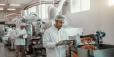
Food processing and development
Research can improve both food processing and food product development.
Additional funding for Chronic kidney disease research
ANSTO to receive a new grant to continue to fight chronic kidney disease killer in Sri Lanka.
ANSTO welcomes revitalised National Science and Research Priorities and National Science Statement
(ANSTO) has welcomed the launch of the new National Science Statement and revitalised National Science and Research Priorities by Minister for Industry and Science, The Hon Ed Husic MP and Australia’s Chief Scientist, Dr Cathy Foley AO PSM.
Safeguarding Australia's healthcare sector with a new nuclear medicine facility
ANSTO today welcomed a significant Federal Government funding allocation to further safeguard the production of life-saving nuclear medicines in Australia.
Publications
Publications and resources from the Powder Diffraction beamline.
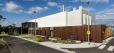
FAQs on the Mo-99 Manufacturing Facility
Frequently asked questions on the Mo-99 Manufacturing Facility and the ANSTO Nuclear Medicine project.
Blue Carbon Horizons Team wins Eureka Prize for Environmental Research
Blue Carbon Horizons Team showed coastal wetlands capture more carbon as sea levels rise
Independent report into safety of Building 23 at ANSTO
The final report on the safety of Building 23 by the independent expert review team has been completed.

Publications, posters and conference presentations
Publications, posters and conference presentations for fire impacts reconstructed from a southwest Australian stalagmite.
Anti leukaemia drug recognised with PM Prize for Innovation
The Australian Synchrotron has played a crucial role in the discovery of a new cancer drug for the treatment of leukaemia.
3D cell printing technology earns ANSTO Eureka Prize for Technology
Researchers and industry partners from UNSW Australia, the Australian Centre for Nanomedicine, Children’s Cancer Institute and Inventia Life Sciences Pty Ltd have been awarded the 2021 ANSTO Eureka Prize for Innovative Use of Technology for their method to rapidly-produce 3D cell structures

Connect with ANSTO's Women in STEM
Read about an ANSTO scientist and their work to prepare for a school project or interview.