Search hero banner

Search results

Showing 221 - 240 of 506 results

Dharawal fishes

Aboriginal cultural heritage

ANSTO recognises the traditional indigenous owners of the land at all its sites and works to contribute to the recognition of the indigenous cultural heritage of Australia.

Chemical Elements banner image

Workbooks

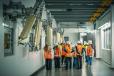
ANSTO provides secondary students with a range of learning resources for those interested in science or studying for exams. For teachers, ANSTO provides learning resources and professional development, as well as in-school-term science tours and videoconferences. Workbooks are provided as required learning material to accompany a school visit to ANSTO. They can also be used on their own as a classroom resource.

generic-background-image

Online learning

Discover the amazing world of nuclear science from your classroom. Join us for Meet an Expert, Nuclear Science Inquiry Skills, Junior Science, and Online Depth Study sessions for Chemistry, Physics and Investigating Science.

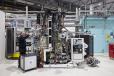
Soft x-ray spectroscopy

Soft x-ray spectroscopy

Soft x-rays are generally understood to be x-rays in the energy range 100-3,000 eV. They have insufficient energy to penetrate the beryllium window of a hard x-ray beamline but have energies higher than that of extreme ultraviolet light.

Apps

Apps

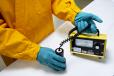
ANSTO has a variety of games and apps to educate students on how radiation works, nuclear medicine, the periodic table, and atom building.

aum atom

ANSTO User Meeting 2023 - Awards

You are invited to submit to the various awards from ANSTO, User Advisory Committee (UAC) and Australian Neutron Beam User Group (ANBUG). 

Think Science! A Nationwide Science Event

Think Science! Competition 2026

The Think Science! competition encourages students in Years 3-10 to learn science inquiry skills in a fun and accessible way! Entry is FREE and there are generous prizes for winning schools. Any topic can be chosen, and special materials are not required.

Call for Proposals

Call for Proposals

Proposals at the Australian Centre for Neutron Scattering and National Deuteration Facility.

Astronauts in space station

Mitigation and Optimisation of Radiation Responses

This program explores the mechanism and outcome of the interaction of radiation on biological systems in order to improve our understanding of the impact of radiation on the brain, optimise radiotherapy and develop mitigation strategies for space travellers.

Pagination