
Collaborators - Planetary Materials
We are part of the Planetary Science community in Australia


Showing 2281 - 2300 of 3559 results
We are part of the Planetary Science community in Australia
Specifications and User Manual
Government response to 2016 National Research Infrastructure Roadmap

Specifications and Instrument references.

Chemical deuteration involves deuterating whole molecules or building blocks for the synthesis of a desired molecule by exposing them to heavy water (deuterium oxide) at high temperatures and pressures in the presence of a catalyst. If required, compounds can then be synthesised from the deuterated building blocks using organic chemistry techniques.
ANSTO welcomes the recent announcement that the inaugural CEO for the Australian Radioactive Waste Agency (ARWA) has been appointed, following a global search. Mr Sam Usher will lead ARWA and comes to the role with almost three decades of experience in the nuclear industry.
ANSTO has been using Ion Beam Analysis (IBA) techniques to analyse fine particle pollution samples collected from key sites around Australia, and internationally, for more than 20 years.

Freely Accessible Remote Laboratories (FarLabs) have developed a nuclear remote online laboratory that schools can use to perform experiments with nuclear radiation. Two experiments allow students to investigate the penetrating power of different forms of radiation and how the amount of radiation decreases with distance.
The FarLabs project is led by the Department of Physics at La Trobe University in collaboration with James Cook University, Curtin University, Quantum Victoria, V3 Alliance, and ANSTO.
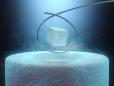
Applications, Recent results, Publications


Our temperature sample environments include closed cycle refrigerators, cryofurnaces, cryostates, furnaces, rapid thermal devices, temperature baths and low temperature inserts.
Small modular reactors can be built using Generation IV reactor technologies, that old the promise of considerably higher efficiency for decarbonised energy production and industrial heat co-generation.

The project aims to engage the wider cultural heritage community in addition to our internal research.

Collaborators on the Magnetism project.
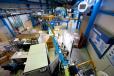
Micro-Elastic Recoil Detection Analysis (µERDA) is used to reconstruct elemental maps from scanned raster points.

This information is provided as a general advice to shipping or bringing samples to ACNS. You should check that details are current when arranging sample transport.