Federal grants for ANSTO expertise and infrastructure will benefit manufacturing and nuclear technologies
Three new federal grants were announced to support manufacturing and nuclear technologies.


Showing 301 - 320 of 1228 results
Three new federal grants were announced to support manufacturing and nuclear technologies.
New facility will greatly enhance Australia’s capability in stress engineering for industry

Useful in some mineral processes but a major problem in others, jarosite may be the key to unlocking the geological history and environmental context of water on Mars.
ANSTO welcomes the recent announcement that the inaugural CEO for the Australian Radioactive Waste Agency (ARWA) has been appointed, following a global search. Mr Sam Usher will lead ARWA and comes to the role with almost three decades of experience in the nuclear industry.
A large contingent of girls who study physics at high schools across Victoria travelled to the Australian Synchrotron in May to attend the annual Girls in Physics breakfast.
Research infrastructure will support research and development of advanced concrete.
A collaboration of Australian scientists has used ANSTO’s Australian Synchrotron to measure the amount of carbon that is captured in microscopic seams of deep-sea limestone, which acts as a carbon sink.
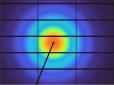
The Biological Small Angle X-ray Scattering beamline will be optimised for measuring small angle scattering of surfactants, nanoparticles, polymers, lipids, proteins and other biological macromolecules in solution. BioSAXS combines combine a state-of-the-art high-flux small angle scattering beamline with specialised in-line protein purification and preparation techniques for high-throughput protein analysis.
Improving aquaculture for food production in Papua New Guinea
ANSTO, Australia’s knowledge centre for nuclear science and technology, connects STEM graduates with industry to work on real-world challenges through its FutureNow Scholarships for 2022.
The 2021 intake of bright young graduates have arrived at the ANSTO Precinct at Lucas Heights and this week will commence their exciting new career to become the nation’s future leaders in STEM and innovation.
Use of nuclear techniques to benefit industry and consumers
ANSTO has unique facilities, capabilities and expertise to investigate materials in extreme environments for applications in energy systems, the defence industry and emerging space sector.


ANSTO is an experienced provider of Teacher Professional Development for Australian and International teachers and our courses cover a wide range of topics. Hear from expert speakers, receive new education resources, and develop lessons for your own class.