

Showing 301 - 320 of 363 results
New therapy targets aggressive form of leukaemia
Australian Synchrotron joins Monash and key institutions in $2.9 million new platform to support drug development
Monash University is partnering with the Australian Synchrotron and other key institutions to launch a $2.9 million national project – delivering a robotic laboratory capable of drastically speeding up the invention, trials and commercialisation of medicines by Australian researchers.
Exploring the role of water in the complex energy landscape of proteins
Using the power of artificial intelligence to help detect disease
An international collaboration led by The University of Sydney and supported by ANSTO has developed an advanced, innovative artificial intelligence application that could be used to help examine tissue samples and identify signs of disease/

2026 Think Science Competition Results
Think Science! 2025 Summary and results
Multiple techniques elucidate hardness with radiation damage
3D models of multilayered structures on engineering scale from nanoscale damage profiles.
Snail shell can act a natural archive of weather and landscape changes
ANSTO has undertaken radiocarbon dating of a snail shell in research led by the University of Queensland, who were investigating if the environmental proxy could provide information about past climate and environmental conditions in Southeast Queensland.
Rock art dating
Development of new techniques makes it possible to date Australian Aboriginal rock art.
Patented technology removes key radioactive contaminant in critical minerals processing
ANSTO has been granted a patent in Australia and a number of European countries for the separation, a key radioactive contaminant in critical minerals processing, actinium-227, from process liquors used in minerals extraction.
Cosmogenic nuclides help explain stone formation
China’s vertical sandstone pillars studied using nuclear techniques

Data sets
Your students can analyse real research data from ANSTO scientists.
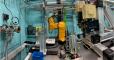
Micro-Computed Tomography beamline (MCT)
With enhanced submicron spatial resolution, speed and contrast, the Micro-Computed Tomography beamline opens a window on the micron-scale 3D structure of a wide range of samples relevant to many areas of science including life sciences, materials engineering, anthropology, palaeontology and geology. MCT will be able to undertake high-speed and high-throughput studies, as well as provide a range of phase-contrast imaging modalities.

Instrument Scientist (Neutron Reflectometry)
Role at ANSTO
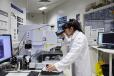
Infrared microspectroscopy
The Infrared Microspectroscopy beamline combines the high brilliance and collimation of the synchrotron beam through a Bruker V80v Fourier Transform Infrared (FTIR) spectrometer and into a Hyperion 3000 IR microscope to reach high signal-to-noise ratios at diffraction limited spatial resolutions between 3-8 μm.
Water experts share insights into unique environment of Thirlmere Lakes
ANSTO has produced a comprehensive report for the NSW Department of Planning and Environment that represents a significant scientific investigation of the connections, pathways and processes of water loss from the Thirlmere Lakes system.
Nuclear techniques confirm rare finding that crocodile devoured a baby dinosaur

ANSTO User Meeting 2023 - Awards
You are invited to submit to the various awards from ANSTO, User Advisory Committee (UAC) and Australian Neutron Beam User Group (ANBUG).
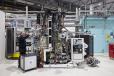
QANT
An analysis program for viewing and analysing near-edge X-ray absorption fine-structure (NEXAFS) spectra.

Highlights - Magnetism
Highlights of the Magnetism Project.