

Showing 321 - 340 of 774 results
Distinguished researchers who use synchrotron techniques recognised

The 2024 ANSTO Australian Synchrotron Stephen Wilkins Medal
ANSTO is seeking nominations for the ANSTO Australian Synchrotron Stephen Wilkins Thesis Medal.

Deaf Youth Science Camp
The 2025 Deaf Youth Science Camp is a chance for Deaf/hard-of-hearing young people (aged 12-17 years old) to participate in an immersive science experience. At the camp, participants will do hands-on science activities, go on tours of different science facilities, and meet Deaf STEM professionals. The camp is also an opportunity to develop personal and leadership skills as well as enhance friendship networks.
ANSTO shares award
Paper on redefinition of the kilogram receives international award
Award recipients to present Distinguished Lectures
Award recipients Dr Richard Garrett and Dr Nigel Lengkeek with Dr Tien Pham will deliver a Distinguished Lecture on 15 November at ANSTO.
Ceramisphere had its origins at ANSTO
Early research at ANSTO has contributed to development of innovative submicron particle encapsulation technology.

Teacher Professional Development Courses
ANSTO is an experienced provider of Teacher Professional Development for Australian and International teachers and our courses cover a wide range of topics. Hear from expert speakers, receive new education resources, and develop lessons for your own class.
Instrument scientist Dr Susi Seibt joins Superstars of STEM to showcase the power of advanced scientific techniques
NSW RFS Hazard Reduction Burn at ANSTO
Collaboration publishes landmark blue carbon study
ANSTO environmental scientists contribute to investigation of carbon capture in wetlands.
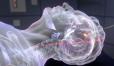
Radiotherapy
The radiography program focuses on the development of Neutron Capture Enhanced Particle Therapy (NCEPT) from initial preclinical work, to clinical trials and finally commercial translation and licencing.
Australia steps up to prevent a world nuclear medicine shortfall
New nuclear medicine manufacturing facility
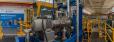
ANSTO Synroc® Treatment Facility
ANSTO Synroc® is constructing an Australian radioactive waste treatment facility for the by-products of Molybdenum-99 (Mo-99) production.
Improving the radiation tolerance of microelectronics for space
A team of Melbourne researchers and international partners from Italian Instituto Nazionale de Fisica Nucleare (INFN) and CERN, who are developing radiation-hardened semiconductor chips, used the unique state-of-art high energy ion microprobe on the SIRIUS ion accelerator at ANSTO’s Centre for Accelerator Science to test a prototype radiation-resistant computer chip
The best behind the neutron beam: Awards announced
Four annual awards in neutron scattering were announced at Australian Neutron Beam Users Group (ANBUG) and AINSE Neutron Scattering Symposium (AANSS) to individuals with strong links to ANSTO
Preventing catastrophic failure in lithium ion batteries
Eureka Prize win for Monash University and ANSTO
Recognition of research that developed a life-saving pharmaceutical milkshake using synchrotron techniques.

Technology Innovation
ANSTO is dedicated to identifying opportunities for the application of knowledge and technology developed by the organisation for a wide range of industry applications.