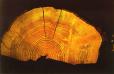
Radiocarbon dating
Radiocarbon dating is a well-known method for determining the age of materials up to the age of approximately 50,000 years.


Showing 361 - 380 of 529 results
Radiocarbon dating is a well-known method for determining the age of materials up to the age of approximately 50,000 years.
China’s vertical sandstone pillars studied using nuclear techniques
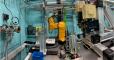
With enhanced submicron spatial resolution, speed and contrast, the Micro-Computed Tomography beamline opens a window on the micron-scale 3D structure of a wide range of samples relevant to many areas of science including life sciences, materials engineering, anthropology, palaeontology and geology. MCT will be able to undertake high-speed and high-throughput studies, as well as provide a range of phase-contrast imaging modalities.
On average, there is now 17 per cent less rainfall across Western Australia’s south-western region than was recorded prior to 1970. This rainfall reduction has economic, social and environmental implications for the region, in particular for the growing capital of Perth, as well as water-dependent industries in the state.
A unique scientific capability comprising a single research platform for high-fidelity simulation, real-time dosimetry, and biological response data is available all from a neutron instrument.
ANSTO environmental scientists contribute to investigation of carbon capture in wetlands.
The independent nuclear regulator, ARPANSA, is currently accepting submissions about ANSTO’s planned $59.8 million Intermediate Level Solid Waste Storage Facility.
ANSTO has installed a radon detector for Curtin University in Burrup WA as part of the Murujuga Rock Art Monitoring Program
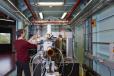
Beamtime Guide on the X-ray Fluorescence Microscopy beamline at the Australian Synchrotron.
Research has revealed the Lapita cultural group interacted with the indigenous people of Papua New Guinea more than 3,000 years ago and set the stage for the peopling of the Pacific

Accelerator Operator.
The nandin Deep Technology Incubator at ANSTO’s Lucas Heights innovation precinct has welcomed two new members.
Jobs supported through the nandin Innovation Centre at ANSTO have skyrocketed 360 per cent since opening, with member businesses raising more than $3.9 million in capital, in a major boost for the local Sutherland Shire economy.
This week ANSTO formally launched the nandin Deep Technology Incubator, a full-service innovation hub that enables the best and the brightest minds to come together to foster innovation and change.
The mechanical, electrical, chemical, optical and thermal properties of glass, as determined by its chemical composition and atomic structure, make it a highly useful material with a myriad of applications.