Instrument Scientist
Dr Filomena Floriana Salvemini is an instrument scientist on the neutron imaging instrument DINGO.


Showing 381 - 400 of 676 results
Dr Filomena Floriana Salvemini is an instrument scientist on the neutron imaging instrument DINGO.
Using nuclear techniques to help sustain Australia's finite groundwater resources
ANSTO provides a range of capabilities using neutrons, X-rays and infrared radiation to study the solids, liquids and gases that might be found in materials in our solar system and beyond.
ANSTO provides a range of capabilities using neutrons, X-rays and infrared radiation to study the solids, liquids and gases that might be found in materials in our solar system and beyond.
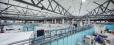
The BRIGHT Project will expand the beamline infrastructure of the Australian Synchrotron to increase both its capacity and capabilities.
Million year lag time in transport of sediment in Murray Darling River Basin system.
ANSTO maintains national capabilities in radionuclide metrology, the measurement and detection of ionising radiation, radioanalytical chemistry and nuclear forensics to support industry, government and scientific users.
ANSTO can confirm it has completed its 9th successful export of spent fuel. The spent fuel, from OPAL, ANSTO’s multipurpose reactor, has gone to France for reprocessing.
nandin member, SVSR, report on their proof-of-concept for a reusable Graphene Oxide (GO) membrane to capture waste water vapours from ageing sewerage systems.
Best and brightest recognised in 2017 research awards
Accurate ‘fingerprinting’ tool to verify source of origin is in development with collaborators from academia and industry.
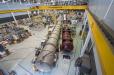
Proposals at the Australian Centre for Neutron Scattering and National Deuteration Facility.
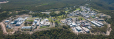

ANSTO, Australia’s knowledge centre for nuclear science and technology, connects STEM graduates with industry to work on real-world challenges through its FutureNow Scholarships for 2022.
ANSTO’s Dr Joanne Lackenby and Dr Katie Sizeland have been selected 2018 Superstars of STEM as some of Australia’s most inspiring scientists, technologists and educators.