Understanding how a common food additive causes changes in the microbiome
ANSTO has collaborated on a study assessing the impact of the commonly-used food additive titanium dioxide (TiO2) on gut microbiota and inflammation.


Showing 401 - 420 of 1651 results
ANSTO has collaborated on a study assessing the impact of the commonly-used food additive titanium dioxide (TiO2) on gut microbiota and inflammation.

Dr. Liza McDonough is an early career researcher with expertise in groundwater chemistry. She is employed as a Researcher at ANSTO and splits her time between speleothem palaeoenvironment and Antarctic hydrology research. Dr.
ANSTO, Australia’s knowledge centre for nuclear science and technology, connects STEM graduates with industry to work on real-world challenges through its FutureNow Scholarships for 2022.
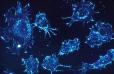
ANSTO health researchers have expertise in the development of radioactive probes and imaging techniques.
The NSW Government will invest $12.5 million to support the expansion of the Innovation Precinct at the Lucas Heights campus of the Australian Nuclear Science and Technology Organisation (ANSTO).
The new trilateral security partnership between Australia, the UK and the US (AUKUS) is a historically significant development for nuclear science and technology in Australia.
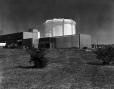
In April 15, 1953, Australia entered the nuclear science arena, when the Atomic Energy Act came into effect. The Australian Atomic Energy Commission (AAEC) followed and in 1987 the AAEC evolved into the Australian Nuclear Science and Technology Organisation (ANSTO) as it’s known today.
Korean physicists concluding placement at ANSTO under a collaborative agreement.
Director of the Australian Synchrotron Prof Andrew Peele has been appointed to Australian Mathematical Sciences Board.
ANSTO has signed a strategic agreement with the Australian National University and sets the relationship between the two organisations, who collaborate on important projects, such as the fusion energy project ITER and space research, well into the future.
Participate in live radiation demonstrations, cover syllabus content and visit ANSTO virtually during our online depth study classes for Year 11 Chemistry.
- Investigate properties of different radioisotopes and learn about their uses in medicine, industry and environmental research.
- Consider the scientific method and gather data during a live radiation experiment.
- See some of Australia's largest scientific infrastructure, including the OPAL multipurpose reactor.
Cost: $90 per class.