Research Support/Fieldwork Officer


Showing 401 - 420 of 1024 results
International study has revealed a clustering of charged particles in the microgravity environment of space,with implications for the development of materials and better drugs that depend on the mixing of two or more charged particles.
Ancient groundwater in Australia contributing carbon to food webs through surface water.
Mathematical insights explain inconsistencies in experimental data: pyrochlore transformation into defect fluorite or not?
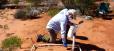
Research to determine the potential dose from long- lived radioactive substances at mining, legacy sites and nuclear facilities.
ANSTO has made a contribution to the successful NASA/JPL Ingenuity helicopter flight on Mars through instrument scientist, Dr Andrew Nelson, who was one of the many developers of the open-source software SciPy used in the flight.
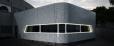
The Advanced Diffraction and Scattering beamlines (ADS-1 and ADS-2) are two independently operating, experimentally flexible beamlines that will use high-energy X-ray diffraction and imaging to characterise the structures of new materials and minerals.
Radioisotopes are widely used in medicine, industry, and scientific research. New applications for radioisotopes are constantly being developed.
ANSTO is proud to support calls for daring and innovative ideas to fight COVID-19 as part of the ACS online Flatten The Curve hackathon.
First paper from Bilby investigates the effects of inorganic ions on the self-assembly of lecithin

Career Statement and Role at ANSTO
Detailed molecular structure of silver nanocrystals determined
Radiation testing of electronic components at ANTO could benefit the aviation industry, regulators and most importantly, passengers as solar radiation events increase.
Neutron Capture Enhanced Particle Therapy developed at ANSTO.