

Showing 461 - 480 of 887 results

Instrument Scientist
Role at ANSTO

Senior Scientist, Soft X-ray Spectroscopy Beamline
Role at ANSTO
Yingjie Zhang in the research spotlight
ANSTO Nuclear Fuel Cycle researcher recognised for contributions to crystallography and structural chemistry on actinides and lanthanides.
Radioactive Facilities Manager & Indigenous Outreach Committee Chair - ANSTO
Dale Codling leads a team at ANSTO that is responsible for the operation, maintenance, and security of research facilities capable of handling nuclear and radioactive materials.
Instrument Scientist
Role at ANSTO
Grant funds a search for the precursors of life on icy Titan
ANSTO will participate in a New Zealand Marsden project which will search for chemical clues linked to the origins of life on Titan, Saturn’s largest moon.
Historical tour of HIFAR
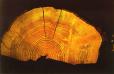
Radiocarbon dating
Radiocarbon dating is a well-known method for determining the age of materials up to the age of approximately 50,000 years.
ANSTO part of the team recognised with high commendation for innovative defence research
First light achieved for new micro-computed tomography beamline under Project BRIGHT
Project Bright, the construction of eight new beamlines at ANSTO’s Australian Synchrotron has reached a milestone by achieving ‘First Light’ for the new micro-computed tomography (MCT) beamline in late NovembeR.
From a Perth classroom to the International Space Station via Lucas Heights
A radiation sensor designed and built by Western Australian high school students has been tested on an ANSTO ion beam, ahead of its trip to the International Space Station later this year. The Binary Space Program is a research group at Curtin University that, in 2021, designed, built and flew Western Australia's very first homegrown satellite, Binar.
Improving the radiation tolerance of microelectronics for space
A team of Melbourne researchers and international partners from Italian Instituto Nazionale de Fisica Nucleare (INFN) and CERN, who are developing radiation-hardened semiconductor chips, used the unique state-of-art high energy ion microprobe on the SIRIUS ion accelerator at ANSTO’s Centre for Accelerator Science to test a prototype radiation-resistant computer chip

Senior Materials Chemist
Role at ANSTO

Archive
Archive of ANSTO research publications, seminars and short talks.
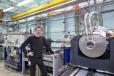
X-ray absorption spectroscopy
X-ray absorption spectroscopy (XAS) is a versatile tool for chemistry, biology, and materials science. By probing how x rays are absorbed from core electrons of atoms in a sample, the technique can reveal the local structure around selected atoms.
Research highlights how to make food different and better by design
International researchers have used nuclear techniques at ANSTO - a centre for food materials science - to develop a methodology that could assist in the design of oleogel systems for food applications.
Contribution to book on food structure
Contribution to Handbook of Food Structure and Development showcases ANSTO expertise in food science.
What is Indigenous Cultural Intellectual Property: An explainer
indigenous Cultural Intellectual Property is a broader way of talking about First Peoples’ rights to their cultural heritage, traditional knowledge and cultural expressions.

Incredible Insects Competition - Results 2021
Incredible Insect Competition Winners of 2021. Digital colouring-in competition.