Radon - the new pollution watchdog
Atmospheric scientists have developed a new technique to measures the naturally-occurring radioactive gas radon for use in accurately categorising the degree of atmospheric mixing.


Showing 521 - 540 of 973 results
Atmospheric scientists have developed a new technique to measures the naturally-occurring radioactive gas radon for use in accurately categorising the degree of atmospheric mixing.
A new source added to ANSTO’s cosmogenic toolkit to study past climate and landscape change
A collaboration of scientists from RMIT, ANSTO and the CSIRO has published pioneering research that brings new insights into intrinsically disordered proteins and protein regions (IDPs)/ (IDRs) and how they behave under various physiological processes.
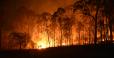
Bushfires heat soil to extreme temperatures and this causes oxidation of chromium to a highly toxic and carcinogenic form.
Imperial College London researchers tapped into ancient geological data locked within precariously balanced rocks using a new technique to boost the precision of hazard estimates for large earthquakes.
New technology is being developed in Sydney to recycle used Personal Protective Equipment (PPE) and turn it into raw materials for 3D printing.
The Australian Centre for Neutron Scattering and National Deuteration Facility have announced the first recipients of the Neutron and Deuteration Impact Awards.
SVSR is seeking a highly motivated engineering candidate with excellent communication skills to help better understand and manage odour emission from sewer ventshafts.
Scientists at ANSTO together with Lithium Australia Limited (LIT) have developed a world-first technology to extract more lithium from lithium mining waste, in a game-changer for Australian lithium industry.
Seven of Australia’s top nuclear medicine professionals have been briefed on ANSTO’s plans to manage radioactive waste, as well as to support nuclear medicine innovation in Australia.

ANSTO shared plans for an Innovation Precinct in southern Sydney at a breakfast event.

Access to a ‘window into the cell’ with University of Wollongong cryogenic electron microscope at ANSTO.
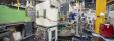
Kowari, a residual stress diffractometer, can be used for ‘strain scanning’ of large engineering components as large as 1000 kilograms.
ANSTO contributes to new international project to improve how the world assesses the economic viability of Small Modular Reactors