
Glass: More Than Meets the Eye
Explore the exciting finalist and runner up entries of previous year ANSTO hackathons!


Showing 521 - 540 of 861 results
Explore the exciting finalist and runner up entries of previous year ANSTO hackathons!
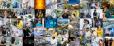
This week ANSTO formally launched the nandin Deep Technology Incubator, a full-service innovation hub that enables the best and the brightest minds to come together to foster innovation and change.
ANSTO proudly contributes to measures that recognise all aspects of Aboriginal and Torres Strait Islander culture and heritage during NAIDOC Week and all year.
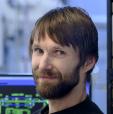
Dr Klaus Wilcken is an accelerator mass spectrometry scientist at the Centre for Accelerator Science (CAS) with over 12 years of experience with suite of AMS isotopes & techniques.
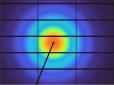
The Biological Small Angle X-ray Scattering beamline will be optimised for measuring small angle scattering of surfactants, nanoparticles, polymers, lipids, proteins and other biological macromolecules in solution. BioSAXS combines combine a state-of-the-art high-flux small angle scattering beamline with specialised in-line protein purification and preparation techniques for high-throughput protein analysis.

New class of conducting materials found for potential use in next generation fuel cells and other applications.
The newly built Medicines Manufacturing Innovation Centre (MMIC), co-located at the Australian Synchrotron at Clayton, was officially opened on Wednesday by the Victorian Deputy Premier and Minister for Medical Research the Hon Ben Carroll.
ANSTO scientists were members of an inter-disciplinary team led by the University of Sydney, who examined six 19th century West African swords, using a non-invasive multi-methodological approach to reveal the composition and manufacturing history of the iron implements.


Role at ANSTO
Dr Richard Mole is an instrument scientist co-responsible for the cold-neutron time-of-flight spectrometer PELICAN.
ANSTO, Australia’s knowledge centre for nuclear science and technology, connects STEM graduates with industry to work on real-world challenges through its FutureNow Scholarships for 2022.
Mathematical insights explain inconsistencies in experimental data: pyrochlore transformation into defect fluorite or not?

Research to understand how contaminants move through the soil and affect ecosystems and humans as well estimating emissions.
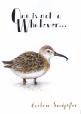
ANSTO is proud to host the Shorebirds Competition for the fourth year. This unique environmental poster competition is free to enter and offers over $4000 in prizes (insert link to prizes button) for students and schools!
Shift in the treatment of blood cancers taking place.