Radiocarbon dating at ANSTO informs date of oldest known Aboriginal rock art
Radiocarbon dating capabilities at the Centre for Accelerator Science have provided evidence of a 17,300-year old painting of a kangaroo from the Kimberley region.


Showing 521 - 540 of 590 results
Radiocarbon dating capabilities at the Centre for Accelerator Science have provided evidence of a 17,300-year old painting of a kangaroo from the Kimberley region.
In a new study published in Nature Communications, researchers from UNSW have demonstrated a more sustainable alternative: an electrochemical pathway that couples carbon dioxide and nitrogen-containing species to produce urea under mild conditions.
A large international collaboration has developed a straightforward and cost-effective synthesizing approach using a 3D printing technique to produce single atom catalysts (SACs)—potentially paving the way for large scale commercial production with broad industrial applications.
Measurement research undertaken to ensure safe, well-engineered nanoparticles
ANSTO has been granted a patent in Australia and a number of European countries for the separation, a key radioactive contaminant in critical minerals processing, actinium-227, from process liquors used in minerals extraction.

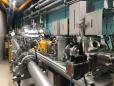
The Medium Energy- X-ray Absorption Spectroscopy beamlines provides access to XANES and EXAFS data from a bending magnet source, optimised for cutting-edge applications in biological, agricultural and environmental science in an energy range that is not currently available at the Australia Synchrotron.
A cross-disciplinary team has used laboratory-based and synchrotron-based infrared spectroscopy imaging techniques to monitor the waxy surface of living plant leaves in real-time to gain insights into plant physiology in response to disease, biological changes or environmental stress.
Grant supports development of handheld technology to verify origin of seafood.
Two early career nuclear scientists who received international scholarships have spent time in the Nuclear Fuel Cycle group at ANSTO are making progress on their work to improve nuclear fuel.
A new systematic investigation of the origins of atomic structural distortions in compounds containing uranium has relevance for spent nuclear fuel .
ANSTO is a partner on the National Space Qualification Network (NSQN) led by the Australian National University (ANU) that will transform Australia into a world-leading space centre by enhancing facilities to test payloads, components, and hardware prior to their use in harsh environments of space.
Collaborative research predicted the distortion and performance of metal parts made by laser deposition.
Commitment to undertake health research.
China’s vertical sandstone pillars studied using nuclear techniques
ANSTO has hosted its second IAEA Practical Introduction to Nuclear Forensics Regional Training Course for representatives of member countries from South-East Asia, sharing expertise on the theoretical and practical aspects of nuclear forensics to respond to incidents of nuclear or other radioactive material out of regulatory control.
ANSTO has provided supporting experimental evidence of a highly unusual quantum state, a quantum spin liquid (QSL), in a two-dimensional material.
University of Melbourne researchers have investigated a method to produce magnetic nanoparticles in Australia for use in COVID-19 PCR tests.
A collaboration of Australian scientists has used ANSTO’s Australian Synchrotron to measure the amount of carbon that is captured in microscopic seams of deep-sea limestone, which acts as a carbon sink.