Significant progress on ultraflexible solar cells
A collaborative group including Monash has produced an ultra-thin and ultra-flexible organic solar cell for advanced wearable devices.


Showing 541 - 560 of 1644 results
A collaborative group including Monash has produced an ultra-thin and ultra-flexible organic solar cell for advanced wearable devices.
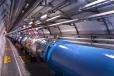
ANSTO groundwater experts have collaborated with the NSW Department of Planning, Industry and Environment on a comprehensive survey of groundwater resources in the state.
Applications open for 2017 ANSTO Australian Synchrotron Stephen Wilkins Medal
Nominations are being accepted for the 2017 Stephen Wilkins medal for an outstanding thesis.
Research has demonstrated that internally generated neutrons could be used to effectively target micro-infiltrates and cancer cells outside of the defined treatment regions.
An unusual and very exciting form of carbon - that can be created by drawing on paper - looks to hold the key to real-time, high throughput DNA sequencing, a technique that would revolutionise medical research and testing.
The Australian Academy of Technology and Engineering (ATSE) has elected Professor Andrew Peele, Director of ANSTO’s Australian Synchrotron, to become a Fellow of the prestigious organisation.
Radiocarbon dating at ANSTO has supported research that vastly extends the known timeline of the Aboriginal occupation of South Australia’s Riverland region.
Powerful combination of deuteration and neutron scattering used to characterise structure of molecules on surface of nanoparticles.
Research on a rare type of superconducting intermetallic alloy
Technology at heart of award-winning wastewater innovation from BioGill.

This scholarship recognises outstanding ability and promise in the field of nuclear science and technology, specifically as it applies to nuclear energy. Successful applicants will demonstrate a history of interest in nuclear energy and a desire to continue this interest.
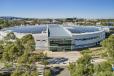
ANSTO is seeking nominations for the ANSTO Australian Synchrotron Stephen Wilkins Thesis Medal.
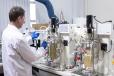
Biodeuteration involves the growth of microorganisms in a heavy water (deuterium oxide) culture medium supplemented with either a deuterated or hydrogenated carbon substrate, depending on the level of deuteration required. The biomass is harvested and the deuterated molecule (e.g. protein) is purified and characterised.