
Health Research and Technology
ANSTO uses its infrastructure, capabilities and expertise to build knowledge and optimise the beneficial impacts of nuclear science on human health.


Showing 61 - 80 of 2448 results
ANSTO uses its infrastructure, capabilities and expertise to build knowledge and optimise the beneficial impacts of nuclear science on human health.
ANSTO is participating in a major project to learn more about an important component of the atmosphere, the hydroxyl radical.
Radiocarbon measurements at ANSTO’s Centre for Accelerator Science have supported research published that provided insights into what the environment was like for the Aboriginal artists who created rock art over intervals spanning 43,000 years.
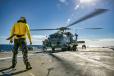
Defence requirements push your technology, we can help. ANSTO is home to some of Australia’s most important landmark research infrastructure – more than $1.3bn of it. Our unique capabilities are used by thousands of Australian researchers from industry and academia every year.
Australia is leading an agriculture project in the Asia and Pacific region, in partnership with the International Atomic Energy Agency (IAEA) and the Regional Cooperative Agreement for Research, Development and Training Related to Nuclear Science and Technology for Asia and the Pacific (RCA) to progress Atoms4Food.
ANSTO scientists are participating investigators in three new ARC Industrial Transformation Training Centres, recently announced by the Government.
Radiocarbon dating capabilities at the Centre for Accelerator Science have provided evidence of a 17,300-year old painting of a kangaroo from the Kimberley region.

With more than 50 years of experience in monitoring natural and anthropogenic radionuclides in the environment, ANSTO can provide the crucial data and insights you need to assist with the planning and risk management associated with oil and gas decommissioning.
ANSTO has undertaken radiocarbon dating of a snail shell in research led by the University of Queensland, who were investigating if the environmental proxy could provide information about past climate and environmental conditions in Southeast Queensland.
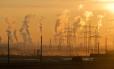
Datasets from the Aerosol Sampling Program.
The ARC Centre of Excellence (CoE) for Green Electrochemical Transformation of Carbon Dioxide, GETCO2, will support innovative approaches to carbon capture.
Research investigates traditional Indigenous Australian burning techniques in managing landscape and reducing fuel loads.
Australia launched a new international development project in partnership with the International Atomic Energy Agency (IAEA) to advance ‘Rays of Hope’ in the Asia and Pacific region.
ANSTO has recently participated in a regional program in Bangkok, Thailand, on food safety, security, and productivity using nuclear science and technology in Southeast Asia and the Pacific Islands.
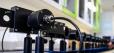
The Multi-wavelength absorption black carbon instrument MABI can determine the concentration and source of black carbon pollution.
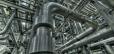
ANSTO’s suite of infrastructure and capabilities is ideally suited for solving problems relating to the development and characterisation of advanced materials, and the engineering of manufactured components and processes.
ANSTO hosted an online training workshop for the FNCA (Forum for Nuclear Cooperation in Asia) project Combating Food Fraud using Nuclear Technology (CFF) in early December.