Using nuclear techniques for coastal environments
IAEA Regional Training Course on coastal environments held at ANSTO for representatives from Asian Pacific.


Showing 661 - 680 of 1280 results
IAEA Regional Training Course on coastal environments held at ANSTO for representatives from Asian Pacific.
New research published a team from the Imperial College London, University of Glasgow and ANSTO suggests that rock coasts, which make up over half the world’s coastlines, could retreat more rapidly in the future due to accelerating sea level rise.
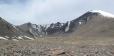
Research to assess the impact of recent landscape change by measuring fundamental geomorphic processes that are the result of long-term landscape evolution.
Environmental scientist with a passion for fieldwork and a lifelong commitment to scientific excellence
A large international research team led by Academia Sinica in Taiwan investigated how heat is transferred in an advanced thermoelectric material made with germanium (Ge) and tellurium (Te) and doped with antimony (Sb). These devices are used to power space probes such as the Mars Curiosity Rover.

The University of Newcastle and UNSW [GW1] are using advanced neutron scattering techniques at ANSTO to carry out research on the structure of polymers in complex salt environments that will ultimately provide a way to predict their behaviour for real-world applications.
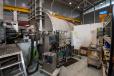
Sample environments, Data Analysis.

In Australia and the Southeast Asia basin, the ANSTO facility offers a wide range of unique nuclear-beam techniques for cultural heritage research.
ANSTO scientists will contribute to a new $1 million ARC Linkage Project grant to evaluate human responses to post glacial sea level rise at Red Lily, Arnhem land led by Griffith University.
Project focuses on enhancing crop productivity in Asia Pacific countries by improving soil and water.
ANSTO has produced a comprehensive report for the NSW Department of Planning and Environment that represents a significant scientific investigation of the connections, pathways and processes of water loss from the Thirlmere Lakes system.
Enhancing safety of trailer trucks among research projects
An international team led by scientists at City University of Hong Kong has found flexible metal-organic framework (MOF) with one-dimensional channels that acts as a “molecular trapdoor” to selectively adsorb gases, such as carbon dioxide, in response to temperature and pressure changes.
Stronger research link with IAEA with the establishment of Collaborating Centre at ANSTO to support environment and cultural heritage activities