Distinguishing black carbon sources
MABI instrument can determine both the concentration and source of black carbon pollution in the atmosphere.


Showing 681 - 700 of 928 results
MABI instrument can determine both the concentration and source of black carbon pollution in the atmosphere.
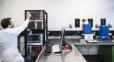
The Australian Industry Becquerel Traceability Program (AIBTP) provides facilities with direct measurement traceability to the Australian standard for the activity of radionuclides used in Positron Emission Tomography (PET).

Tara Djokic is a geologist currently based in the Palaeontology Department of the Australian Museum Research Institute where she is investigating the fossilisation processes of an 11-16 million-year-old rainforest-lake deposit from central N

As a Senior Principal Research Scientist, Henk is participating in several projects applying nuclear techniques to better understand climate changes of the past.

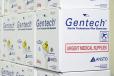
Participate in live radiation demonstrations, cover syllabus content and visit ANSTO virtually during our online depth study classes for Year 11 Chemistry.
- Investigate properties of different radioisotopes and learn about their uses in medicine, industry and environmental research.
- Consider the scientific method and gather data during a live radiation experiment.
- See some of Australia's largest scientific infrastructure, including the OPAL multipurpose reactor.
Cost: $90 per class.
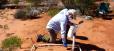
Research to determine the potential dose from long- lived radioactive substances at mining, legacy sites and nuclear facilities.
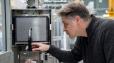
A Laue-diffraction neutron alignment camera for single crystals.
Supercomputing power helps unlock secrets in the ice.
Study shows for the first time that vegetation in the Windmill Islands, East Antarctica is changing rapidly in response to a drying climate.
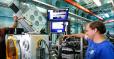
Beamtime guide on the SAX / WAXS beamline at the Australian Synchrotron.

Analysis of environmental samples (predominantly soils, groundwaters, vegetation and biota) for the presence of radionuclide via chromatographic separation methods.

Come and discover the world of nuclear science at ANSTO - book a school tour in Sydney today.
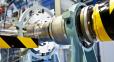
ANSTO has the capability to analyse heavy isotopes such as 129I, platinum group elements, 236U and Pu isotopes.

Professor Andy Baker is an established research scientist at UNSW Sydney, and is an interdisciplinary scientist with links between environmental and earth sciences and engineering which he has applied to speleothem palaeoenvironmental
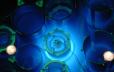
ANSTO, as the Australian centre for nuclear-related research and as the custodian of large research infrastructure is well-positioned to undertake research on molten sale based reactor systems using its capabilities and expertise.

Infastructure used on the Energy Materials Project.
ANSTO researchers have taken up the challenge to develop a coating for the cladding used in nuclear reactors to prevent it from taking up hydrogen and releasing it if temperatures get too high and repair itself if damaged.