
AANSS 2024 - Prizes & Awards
You are invited to submit to the various awards


Showing 81 - 100 of 167 results
You are invited to submit to the various awards
You are invited to submit to the various awards

You are invited to submit to the various awards from ANSTO, User Advisory Committee (UAC) and Australian Neutron Beam User Group (ANBUG).

Highlights of the Energy Materials Project.
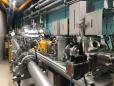
The Medium Energy- X-ray Absorption Spectroscopy beamlines provides access to XANES and EXAFS data from a bending magnet source, optimised for cutting-edge applications in biological, agricultural and environmental science in an energy range that is not currently available at the Australia Synchrotron.
Zachary Di Pietro, a PhD candidate at the University of Newcastle and AINSE Postgraduate Research Award recipient, has received the 2025 Ezio Rizzardo Polymer Scholarship from the Australian Academy of Technological Sciences & Engineering for his innovative work on synthesising and characterising polymer brushes for ultra-low friction surface applications.
ANSTO launches new area of space research in collaboration with the National Centre for Space Studies and the National Institute of Health and Medical research in France.
$80.2 million in new funding to expand the research capabilities of the Australian Synchrotron.
The celebration of the UN’s International Women’s Day 2023 has a theme that highlights the power of innovative IT to combat discrimination and the marginalisation of women globally.
Professor Elliot Gilbert and Dr Norman Booth have received awards from the Australian Neutron Beam Users Group at the 2021 ANSTO Users Meeting
A team of researchers from ANSTO and University of Technology Sydney have set a record by conducting thin film experiments at 1100 degrees C.
The Chair of ANSTO, The Hon Dr Annabelle Bennett, AC SC, announced today that Mr Shaun Jenkinson has been appointed Chief Executive Officer of ANSTO following a global search for the position.

In space, without the protection of the magnetosphere, the type and dose of radiation is considerably different to what is naturally experienced on earth. However, it is the secondary particles of lower energies created when galactic and cosmic radiation interacts with shielding that is of concern for astronauts.

In collaboration with the French National Institute of Health and Medical Research (INSERM) and the French International Space Agency (CNES), ANSTO scientists are undertaking research on the radiobiological effects of secondary particles that are created when radiation interacts with the shielding on the International Space Station.
Useful in some mineral processes but a major problem in others, jarosite may be the key to unlocking the geological history and environmental context of water on Mars.