Insights on Alzheimer’s disease
Combined imaging approach characterises plaques associated with disease.


Showing 801 - 820 of 1658 results
Combined imaging approach characterises plaques associated with disease.
Scandium 47, a therapeutic radioisotope and potential theranostic, has been produced for the first time at ANSTO. Theranostics are used to both diagnose and treat disease.
Using nuclear techniques to help sustain Australia's finite groundwater resources
A special inaugural event held by ANSTO at its Australian Synchrotron for more than 30 funding organisations has showcased the first of the $100 million BRIGHT Program’s brand new, state-of-the-art beamlines.
Using the Australian Synchrotron, an international team of researchers has characterised an important interaction that helps the SARS-CoV-2 virus invade human cells.
ANSTO among collaborators to major study of greenhouse gases.
Australia is as a member of the Generation IV International Forum (GIF), a cooperative international endeavour, involving the participation of 12 other nations and the European Union to work together on long term research on advanced nuclear technologies.
ANSTO Big Ideas encourages students to creatively communicate the work of an Australian scientist, and explain how their work has inspired them to come up with a Big Idea to make our world a better place. This competition is intended to engage and support Australian students in years 7-10 in Science and encourage them to pursue studies and careers in STEM.
Nine PhD students are taking part in a rare opportunity to deliver an innovative solution to a real-world challenge for an industry partner in ANSTO’s National Graduate Innovation Forum in association with the Australian Council of Deans of Science and the Australian Institute of Nuclear Science and Engineering.
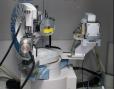
This instrument can measure reflectivity at air-solid or air-liquid interfaces.
In mid-February ANSTO attended a meeting at the International Atomic Energy Agency (IAEA) to discuss and produce recommendations for the development of a new Coordinated Research Project (CRP) on Seafood Origin and Authenticity using Nuclear and Related Technologies to progress the IAEA flagship initiative Atoms4Food.
Cosmogenic nuclides measurements at ANSTO to be part of large international Antarctic glacier research.
This joint initiative at ANSTO has developed a new capability: solid surface radiolabelling to evaluate Auger emitting sources for next-generation targeted therapy.
ANSTO scientists were members of an inter-disciplinary team led by the University of Sydney, who examined six 19th century West African swords, using a non-invasive multi-methodological approach to reveal the composition and manufacturing history of the iron implements.
Using geoarchaeology to reconstruct the history of an ancient Khmer city.
Dharawal educator Fran Bodkin has spent a good part of her eighty plus years, studying or sharing information about the therapeutic and nutritional properties of traditional indigenous plants and wildlife.
ANSTO to ensure ultra-low radiation environment in newly-funded Stawell Underground Physics Laboratory.
Your efforts are helping better manage our wetlands and waterways, and protect the precious wetland birds that rely on them.
Join us for this online webinar to explore and discuss the huge opportunities in growing a dynamic and impactful future nuclear workforce.