Clean water hackathon delivers potential solutions
Sri Lankan students took part in an innovative hackathon to develop novel solutions to a wastewater runoff problem from reverse osmosis water treatment plants.
Showing 901 - 920 of 1152 results
Sri Lankan students took part in an innovative hackathon to develop novel solutions to a wastewater runoff problem from reverse osmosis water treatment plants.
Researchers based at Monash University and the Swedish Museum of Natural History have pioneered the use of nuclear imaging techniques at ANSTO’s Centre for Neutron Scattering to resolve long-standing problems in plant evolutionary history linked to wildfires.
View these case studies for a more detailed look at industry challenges and how CORIS360® radiation imaging technology is improving operational decision making and keeping workers safe.
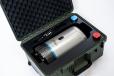
A new imaging technology developed at ANSTO makes it possible to image, identify and locate gamma-ray radiation in a safe and timely manner.
The Australian Centre for Neutron Scattering and National Deuteration Facility have announced the first recipients of the Neutron and Deuteration Impact Awards.
This joint initiative at ANSTO has developed a new capability: solid surface radiolabelling to evaluate Auger emitting sources for next-generation targeted therapy.
Laura Maynard is a Radioactive Waste Management Specialist working in ANSTO’s Nuclear Waste Solutions division.
Accelerator Mass Spectrometry (AMS) is an ultra-sensitive analytical technique based on the use of an ion accelerator as a powerful mass spectrometer.
Outstanding individuals and teams have been recognised for their outstanding work, innovation, excellence in the 2025 ANSTO Awards.
Excellent radiolabelling facilities and the operation of OPAL, a world-class multi-purpose nuclear reactor, enable ANSTO to produce a large range of radioisotopes for Australian researchers in both radiopharmaceutical and environmental areas.
Three ANSTO staff members were involved in a chemical spill this morning when approx 250mL of sodium hydroxide was released from a pipe.
A large international team has provided an understanding of how nanoscale interactions affect the thermal stability of a type of next generation organic solar cells.
ANSTO sets out the following terms and conditions relating to users who access our facilities for the purpose of research.