Radiation Biologist
Role at ANSTO
Nick is a radiation biologist who works for the NST Human Health research theme.


Showing 101 - 120 of 123 results
Nick is a radiation biologist who works for the NST Human Health research theme.

Role at ANSTO
ANSTO recognised the contribution of individuals and teams to nuclear science and technology at the 2023 ANSTO Awards Ceremony held on 25 July.

On the 10th of October 2025, the Minister for Industry, Science and Technology provided his Statement of Expectations to ANSTO.

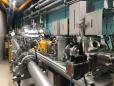
The Medium Energy- X-ray Absorption Spectroscopy beamlines provides access to XANES and EXAFS data from a bending magnet source, optimised for cutting-edge applications in biological, agricultural and environmental science in an energy range that is not currently available at the Australia Synchrotron.
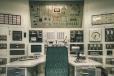

ANSTO will make an application to the independent nuclear regulator, ARPANSA, to vary its license for its Interim Waste Store. The original operating license was approved in 2015, enabling the facility to hold what is called a TN-81 cask of intermediate-level radioactive waste that was safely repatriated from France in 2015.

The International Synchrotron Access Program (ISAP) is administered by the Australian Synchrotron and is designed to assist Australian-based synchrotron users to access overseas synchrotron related facilities.
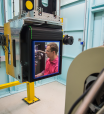
The High Performance Macromolecular Crystallography beamline will enable the study of very small (sub-5 micrometre) or weakly diffracting crystals, providing a state-of-the-art high-throughput facility for researchers. MX3 will be able to study the structures of large proteins and protein complexes for virology, drug design and industrial applications via goniometer mounted crystals, in-tray screening, or via serial crystallography methods.

Stewart started at ACNS in 2007 after completing his Bachelor’s degree where he completed his honours projects with ANSTO.

A team of researchers including the University of Rochester, CSIRO and ANSTO has found methane emissions from human fossil sources have been greatly underestimated.
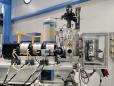
The high-energy heavy-ion microprobe is used for the characterisation or modification of material properties at depths from approximately 1 micrometre to maximum depths of up to 500 micrometres from the material surface.
Dr David Boardman is the Chief Technology Officer & Principal Scientist for Detection & Imaging.

This scholarship recognises outstanding ability and promise in the field of nuclear science and technology, specifically as it applies to nuclear energy. Successful applicants will demonstrate a history of interest in nuclear energy and a desire to continue this interest.
Role at ANSTO