Powerful synchrotron light confirms the presence of rare diamond in stony meteorites
Australian and international researchers have used ANSTO’s Australian Synchrotron to confirm the presence of an unusual diamond found in stony meteorites.


Showing 101 - 120 of 180 results
Australian and international researchers have used ANSTO’s Australian Synchrotron to confirm the presence of an unusual diamond found in stony meteorites.
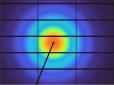
The Biological Small Angle X-ray Scattering beamline will be optimised for measuring small angle scattering of surfactants, nanoparticles, polymers, lipids, proteins and other biological macromolecules in solution. BioSAXS combines combine a state-of-the-art high-flux small angle scattering beamline with specialised in-line protein purification and preparation techniques for high-throughput protein analysis.
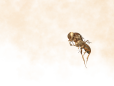
An international team of academic researchers led by Curtin University have provided a description of a new species of pterosaur, a flying reptile.
The analytical power of non-destructive X-ray fluorescence microscopy (XFM) at the Australian Synchrotron has been highlighted in a book chapter in Giorgione, Dante and the Sydney Incunable that features its use on an historic Renaissance work, Dante’s Commedia.

A team of scientists from The Australian National University (ANU) has discovered how a powerful “weapon” used by many fungal pathogens enables them to cause disease in major food crops such as rice and corn
The 3D structure of a fungal and plant enzyme solves 50-year-old mystery.
Project Bright, the construction of eight new beamlines at ANSTO’s Australian Synchrotron has reached a milestone by achieving ‘First Light’ for the new micro-computed tomography (MCT) beamline in late NovembeR.

Beamtime guide on the SAX / WAXS beamline at the Australian Synchrotron.

International palaeontologists have used advanced imaging techniques at ANSTO’S Australian Synchrotron to clarify the role that the earliest fruit-eating birds of the Cretaceous period may have had in helping fruit-producing plants to evolve.

ANSTO is coordinating and facilitating the calling of pre-concept papers for the next cycle of technical cooperative project proposals under the Regional Cooperative Agreement for Research, Development and Training Related to Nuclear Science and Technology for Asia and the Pacific (RCA) | IAEA
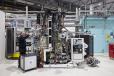
Soft x-rays are generally understood to be x-rays in the energy range 100-3,000 eV. They have insufficient energy to penetrate the beryllium window of a hard x-ray beamline but have energies higher than that of extreme ultraviolet light.
An Australian-led international research team, including a core group of ANSTO scientists, has found that doping a promising material provides a simple, effective method capable of extracting uranium from seawater.
In a world-first study, Australian environmental scientists have used cave stalagmites as a record of groundwater replenishment over time, that showed the current level of rainfall recharging groundwater in southwest WA is at its lowest for at least the last 800 years.
Insights into the crystallisation process of twin crystals important for drug production.
Meeting of minds about potential next-generation cancer treatment for Australians