
Radiochemist
Role at ANSTO
Analysis of environmental samples (predominantly soils, groundwaters, vegetation and biota) for the presence of radionuclide via chromatographic separation methods.


Showing 121 - 140 of 2448 results
Analysis of environmental samples (predominantly soils, groundwaters, vegetation and biota) for the presence of radionuclide via chromatographic separation methods.
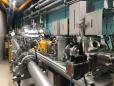
The Medium Energy- X-ray Absorption Spectroscopy beamlines provides access to XANES and EXAFS data from a bending magnet source, optimised for cutting-edge applications in biological, agricultural and environmental science in an energy range that is not currently available at the Australia Synchrotron.
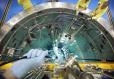
ANSTO addresses key scientific questions in the nuclear fuel cycle for both the current generation of nuclear reactors and future systems.
ANSTO has an association with Ouranos Systems, a company that is developing robust nuclear-based power solutions for satellites and space vehicles.

ANSTO: Australia’s knowledge centre for nuclear science and engineering.
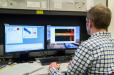
X-ray instruments, physical properties measurements, sample environments, helium polarising system and computing infrastructure

There is an extensive range of equipment, glassware and instrumentation available for use in the laboratories.

On behalf of ANSTO thank you for your interest in our tours. We hope your visit to ANSTO will be both enjoyable and informative.
ANSTO to ensure ultra-low radiation environment in newly-funded Stawell Underground Physics Laboratory.

Recommended accommodation and transport information.

Shorebirds Competition 2022 results.

Three magnet systems are available for use with neutron scattering instruments: horizontal magnets, vertical magnets as well as controlled voltage and current devices.
Dharawal Mural tells an ancient story. Aboriginal and Torres Strait Islander viewers are advised that webpage contains images of people who have died.

Accommodation Information

Several of our instruments are capable of incorporating gas or vapour delivery to the sample under investigation.

The Macromolecular and Microfocus Crystallography beamlines at the Australian Synchrotron (MX1 and MX2) are general purpose crystallography instruments for determining chemical and biological structures.
Environmental Scientist Amy Macintosh is researching the impact of the petroleum industry on Australian marine life.