
Registered Research Service Providers
ANSTO is a registered Research Service Provider (RSP), registration number 12657, under section 29A of the Industry Research and Development Act 1986.


Showing 1281 - 1300 of 2602 results
ANSTO is a registered Research Service Provider (RSP), registration number 12657, under section 29A of the Industry Research and Development Act 1986.
Sample environments, Data analysis.
New oxygen ion conducting material for use in solid oxide fuel cells and other devices

Come and discover the world of nuclear science at ANSTO - book a school tour in Sydney today.
New cathode material provides a direction for the design of high performing sodium ion batteries for large scale energy storage

An instrument used to study any materials with structure of the length scale 1-100nm.

Internationally recognised for their STEM endeavours, Macinley has developed many devices to aid humanity across sectors including, cancer treatment, water sanitation and renewable energy.
nandin member, SVSR, report on their proof-of-concept for a reusable Graphene Oxide (GO) membrane to capture waste water vapours from ageing sewerage systems.

Sarah is a dedicated science communicator with a strong background in education.
Sample environments, Data analysis, SpICE and SICS


ANSTO is a major supplier of Australia’s radioactive isotopes used in nuclear medicine, delivering around 10,000 patient doses each week. Health-based research and development in Australia and overseas also benefit greatly from ANSTO’s unique capabilities and expertise in the detection, diagnosis and treatment of disease using nuclear and accelerator infrastructure.

Guidance for obtaining and maintaining human or animal ethics approval at the Australian Synchrotron.
Sample environments, Data Analysis.

ANSTO's OPAL reactor is one of the world's most advanced and reliable research reactors today. To ensure we can continue operating OPAL safely and reliably and maximise utilisation, ANSTO must regularly carry out maintenance and upgrades.
Advanced imaging technique used to study triggers that lead to tree death
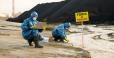
Billions of tonnes of iron ore tailings are generated each year from the mining industry. Converting these toxic tailings into soil-like materials which can develop and sustain plant and microbial communities is critical for mine site remediation and improved environmental outcomes.
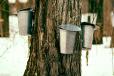
The sap extracted from Sugar Maple trees, is used to produce maple syrup. There are many conflicting theories and an absence of experimental evidence, regarding the mechanisms involved in maple sap exudation.