Where do nano particles go once they enter the body? ANSTO scientist helps shape new OECD guidance
ANSTO scientist Dr Paul Callaghan helped develop new OECD guidance for studying how nanoparticles are absorbed, distributed and cleared by the body.


Showing 141 - 160 of 160 results
ANSTO scientist Dr Paul Callaghan helped develop new OECD guidance for studying how nanoparticles are absorbed, distributed and cleared by the body.
Research confirms that fraudulent Kakadu plum extracts are in circulation online and in the international marketplace.

The Advanced Diffraction and Scattering beamlines (ADS-1 and ADS-2) are two independently operating, experimentally flexible beamlines that will use high-energy X-ray diffraction and imaging to characterise the structures of new materials and minerals.
University of Melbourne researchers have investigated a method to produce magnetic nanoparticles in Australia for use in COVID-19 PCR tests.
A large international team has provided an understanding of how nanoscale interactions affect the thermal stability of a type of next generation organic solar cells.
Australian clean energy technology company, entX Limited is taking advantage of ANSTO’s unique capacity to generate tailored radioisotope products in the OPAL multi-purpose nuclear reactor to advance a series of innovative projects.
Charcoal particles from recent bushfires in NSW were carried 50 kilometres by the wind, which has significance for fire history reconstruction.

Radiocarbon analyses on corals from two sites in Australian waters of the southwest (SW) Pacific has indicated significant changes in ocean circulation in the Pacific and large climate variability during the early to mid-Holocene period (8,000-5,400 years ago).
Imperial College London researchers tapped into ancient geological data locked within precariously balanced rocks using a new technique to boost the precision of hazard estimates for large earthquakes.
Primary students across Australia were invited to create a public awareness poster for a threatened shorebird found in Australia for our 2020 Shorebirds Competition. In response to COVID-19, and the changes to children’s learning environments, we opened the competition early and also included categories for individual children to enter, as well as school children.

The International Synchrotron Access Program (ISAP) is administered by the Australian Synchrotron and is designed to assist Australian-based synchrotron users to access overseas synchrotron related facilities.
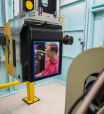
The High Performance Macromolecular Crystallography beamline will enable the study of very small (sub-5 micrometre) or weakly diffracting crystals, providing a state-of-the-art high-throughput facility for researchers. MX3 will be able to study the structures of large proteins and protein complexes for virology, drug design and industrial applications via goniometer mounted crystals, in-tray screening, or via serial crystallography methods.

Archive of ANSTO research publications, seminars and short talks.
Publications and resources from the Powder Diffraction beamline.