
Learn from Australia's nuclear experts
With over 70 years of nuclear expertise, ANSTO offers expert education and training programs


Showing 161 - 180 of 464 results
With over 70 years of nuclear expertise, ANSTO offers expert education and training programs
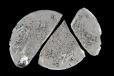
Within the bulk structure of such glasses, boron is known to be a key actor, as it exhibits intriguing and composition-dependent changes in coordination state that often drive properties.
Frequently Asked Questions on the Macromolecular Crystallography beamlines (MX1 and MX2)
Virtual activities celebrating the benefits of nuclear science and technology held for National Science Week
ANSTO's Graduate Program develops the next generation of Australian business and science leaders, by providing the best and brightest postgraduate students with a two-year rotation cycle, tailored to match your talents, goals and interests.
Study helps make carbon dating a more accurate chronological tool.
A radiation sensor designed and built by Western Australian high school students has been tested on an ANSTO ion beam, ahead of its trip to the International Space Station later this year. The Binary Space Program is a research group at Curtin University that, in 2021, designed, built and flew Western Australia's very first homegrown satellite, Binar.

Discover the amazing world of nuclear science from your classroom. Join us for Meet an Expert, Nuclear Science Inquiry Skills, Junior Science, and Online Depth Study sessions for Chemistry, Physics and Investigating Science.

Explore ANSTO's range of publications and reports available for the public.
The cost of building radiation-hardness testing into the design and qualification of electronics is typically well under one per cent of a major project’s budget.
Australian-first detector to accelerate cancer research unveiled.
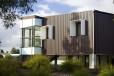
The Australian Synchrotron has an on-site Guesthouse for users and AS guests.
Atmosphere scientists find link between indigenous weather knowledge and Sydney air pollution.
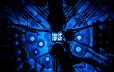
ANSTO's OPAL reactor is one of the world's most advanced and reliable research reactors today. To ensure we can continue operating OPAL safely and reliably and maximise utilisation, ANSTO must regularly carry out maintenance and upgrades.
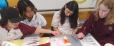
The 2025 Deaf Youth Science Camp is a chance for Deaf/hard-of-hearing young people (aged 12-17 years old) to participate in an immersive science experience. At the camp, participants will do hands-on science activities, go on tours of different science facilities, and meet Deaf STEM professionals. The camp is also an opportunity to develop personal and leadership skills as well as enhance friendship networks.

In partnership with the Australian Museum as part of National Science Week explore the 2020 hackathon theme of Deep Blue: Innovation for the future of our oceans
The Australian led regional cancer care project in medical physics held its first regional training course in Malaysia to progress Rays of Hope.
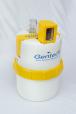
ANSTO’s nuclear medicine processing and distribution facility assembles, loads, tests and distributes a range of nuclear medicine products, including Mo-99. The Mo-99 is dispensed into an ANSTO radiopharmaceutical Gentech® Generator where it decays to Tc-99m.