Secrets of spider web strength revealed
Synchrotron infrared technique reveals first insights into evolution and structure of Australian basket-web spider’s silk.


Showing 1601 - 1620 of 2202 results
Synchrotron infrared technique reveals first insights into evolution and structure of Australian basket-web spider’s silk.
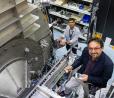
The QUOKKA instrument provides the powerful technique of small-angle neutron scattering which can look at sizes and structures of objects on the nanoscale including soft matter.

Accommodation Information
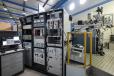
The Centre for Accelerator Science operates four ion accelerators with 11 on sources and 13 beamlines

You are invited to submit to the various awards from ANSTO and the User Meeting 2025 organising committee.
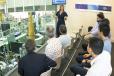
This tour provides an in depth look into the world of nuclear science and the work ANSTO does in the areas of health, the environment and delivering solutions for industry.
Tours are designed for adults and children 8 years and over, and can be booked for groups from Monday to Friday, subject to availability. Groups must be at least 12 people. These are general tours for community groups - if you are a school group, please see our range of syllabus-linked school tours.
Duration: 2.5 hours
Cost: $15 per person
Let your students lead a 30-minute Q&A session with our ANSTO experts about one of the following three topics:
- Nuclear medicines
- Nuclear techniques to study the environment
- Fission and its applications in reactors
Please ensure your students do some pre-reading about the research topic and come prepared with questions to ask during the session. We also ask that teachers send us a copy of the student questions the day before, so we can adequately prepare for your session. Teachers must be present during the session with their students.
Cost: Free

ANSTO has the capability to analyse heavy isotopes such as 129I, platinum group elements, 236U and Pu isotopes.
An environmental study supported by a citizen science project at ANSTO and UNSW has brought greater understanding of the movement of birds between all of Australia’s major water basins and the importance of the Murray-Darling River Basin.
Two ANSTO environmental scientists are part of a large team led by the Australian National University (ANU), who have received an Australian Research Council Discovery Project grant to investigate how environmental change and human activities since industrialisation have impacted the transport and deposition of toxic metals on the south coast of Australia, Tasmania, and remote Southern Ocean islands.
A targeted radioactive infusion that is a game-changer in late-stage prostate cancer can also dramatically improve outcomes for patients in earlier stages of this disease, a Peter Mac-led study has shown.
Nine PhD students are taking part in a rare opportunity to deliver an innovative solution to a real-world challenge for an industry partner in ANSTO’s National Graduate Innovation Forum in association with the Australian Council of Deans of Science and the Australian Institute of Nuclear Science and Engineering.
On average, there is now 17 per cent less rainfall across Western Australia’s south-western region than was recorded prior to 1970. This rainfall reduction has economic, social and environmental implications for the region, in particular for the growing capital of Perth, as well as water-dependent industries in the state.