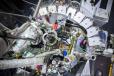
Techniques available at ACNS
At ACNS we currently have 13 instruments in our user program, which use a variety of scattering techniques to probe materials over a range of length scales.


Showing 181 - 200 of 281 results
At ACNS we currently have 13 instruments in our user program, which use a variety of scattering techniques to probe materials over a range of length scales.
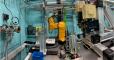
With enhanced submicron spatial resolution, speed and contrast, the Micro-Computed Tomography beamline opens a window on the micron-scale 3D structure of a wide range of samples relevant to many areas of science including life sciences, materials engineering, anthropology, palaeontology and geology. MCT will be able to undertake high-speed and high-throughput studies, as well as provide a range of phase-contrast imaging modalities.
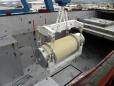
ANSTO waste management services meet regulatory requirements and international best practice standards.
ANSTO facilitating coordinated effort to find the nexus that leads to chronic kidney disease of unknown origin
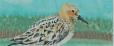
ANSTO is proud to host the Shorebirds Competition for the fifth year. This unique environmental poster competition is free to enter and offers over $4500 in prizes for students and schools!
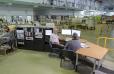
ANSTO plays a leading role in measuring and characterising fine particles from a range of locations around Australia and internationally.
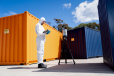
It is critical across many industries to identify and locate sources of radiation accurately and quickly. By accurately imaging radiation across the full energy range, CORIS360™ improves operational decision making across many industry settings.

Highlights of the Energy Materials Project.
Research confirms that fraudulent Kakadu plum extracts are in circulation online and in the international marketplace.

ANSTO researchers are investigating nuclear propulsion systems for applications on the sea and in space.


Offered to girls in Years 5, 6 and 7, the STEAM Club encourages creative exploration of Science, Technology, Engineering and Mathematics through the Arts (the A in STEAM).
Principal Technical Consultant Michael Druce shares some personal insights on the design and construction of ANSTO's nuclear medicine facility.
Dr Jessica Hamilton, a beamline scientist at the Australian Synchrotron, has won the Falling Walls Lab competition hosted by the Australian Academy of Science for her 3 minute presentation on a novel approach to using mining waste for carbon dioxide capture and a source of carbonate minerals. The event is held to deliver solutions to some of the most promising challenges of our time.
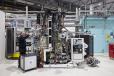
Soft x-rays are generally understood to be x-rays in the energy range 100-3,000 eV. They have insufficient energy to penetrate the beryllium window of a hard x-ray beamline but have energies higher than that of extreme ultraviolet light.
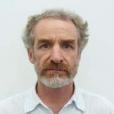
Dr Filomena Floriana Salvemini is an instrument scientist on the neutron imaging instrument DINGO.

ANSTO is Australia’s nuclear centre of excellence. It has a mandated role to advise the Australian Government on all nuclear and science technology matters.

Applications, recent results, publications.
Applications are now being accepted for the Industry foundations Scholarship.