A little bit of the moon just landed at ANSTO
Research on lunar meteorite and moon crater analogues coincides with Science Week.


Showing 181 - 200 of 361 results
Research on lunar meteorite and moon crater analogues coincides with Science Week.
Just under 250 schools in Australia and one school in Malaysia will participate in a series of science-based competitions during to coincide with National Science Week in 2024.

Highlights of the Magnetism Project.
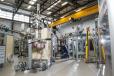
Particle Induced X-ray Emission (PIXE) is a powerful and relatively simple analytical technique that can be used to identify and quantify trace elements typically ranging from aluminium to to uranium.
MABI instrument can determine both the concentration and source of black carbon pollution in the atmosphere.
Atomic structure of new cathode material for sodium ion batteries helps explain long life
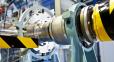
Elastic Recoil Detection Analysis (ERDA) is used principally as a method for measuring hydrogen in thin layers, and in the near-surface region of materials.


Research will change understanding of Australian Aboriginal rock art found in rock shelters of the Kimberley and its relationship to a changing landscape

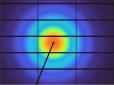
The Biological Small Angle X-ray Scattering beamline will be optimised for measuring small angle scattering of surfactants, nanoparticles, polymers, lipids, proteins and other biological macromolecules in solution. BioSAXS combines combine a state-of-the-art high-flux small angle scattering beamline with specialised in-line protein purification and preparation techniques for high-throughput protein analysis.
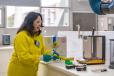

PFAS chemicals in packaging pose serious environmental and health risks, but Australia’s packaging industry is leading the way to phase them out. Backed by cutting-edge nuclear science, industry-led action is creating safer packaging solutions for all Australians.
Improving aquaculture for food production in Papua New Guinea